What if we stopped thinking of nature as something that happens during recess, field trips, or the occasional outdoor lesson—and started thinking of it as part of the learning environment?
I am a big believer in getting kids outside whenever we can. Nature gives children opportunities to move, notice, wonder, explore, problem-solve, create, and connect with something bigger than themselves.
And the good news is that nature-based learning doesn’t have to require a bus, a hiking trail, or hours of planning.
Sometimes it looks like taking your class outside.
Sometimes it means bringing natural materials into your classroom.
And sometimes it is as simple as pressing play on the sounds of rain while students work.

Research continues to explore the relationship between nature exposure, attention, stress, learning, and well-being. One study of university students found that four weeks of daily exposure to nature sounds while completing academic work was associated with greater engagement in deep learning, less academic procrastination, and stronger academic self-efficacy. While this study involved college students—not elementary students—it offers another interesting reason to consider how we intentionally incorporate nature into learning environments.
Here are 9 simple nature-based ideas organized into three tiers, depending on how much time, space, and preparation you have.
🌱 TIER 1: WHOLE-CLASS + LOW-PREP
These ideas are easy to incorporate with an entire class and don’t require a lot of materials.
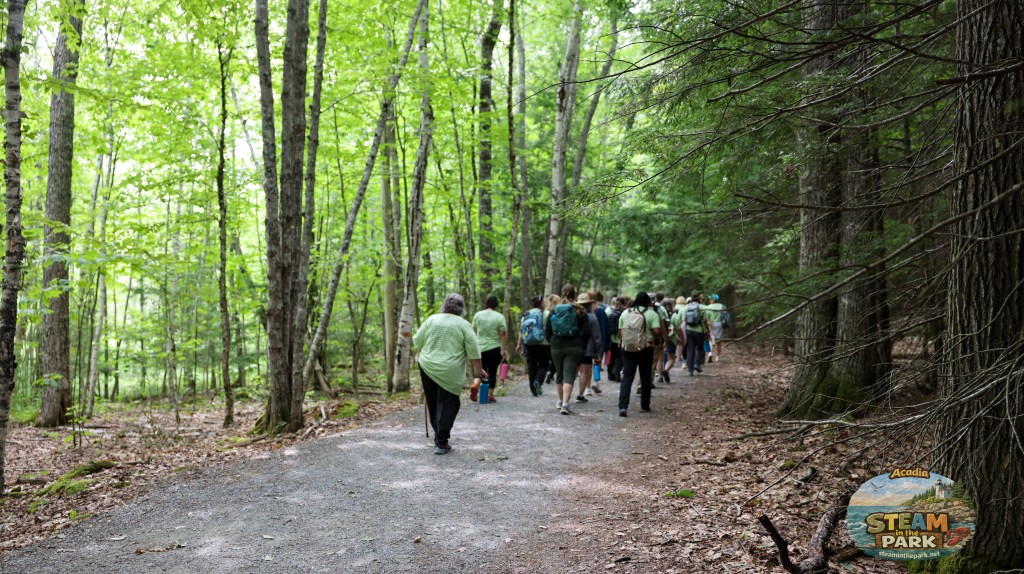
1. Take a Mindful Nature Walk
You don’t need a nature trail to take a nature walk.
Head outside and invite students to slow down and notice what is around them.
Try giving them a few things to look for:
- What can you see?
- What can you hear?
- What can you feel?
- What can you smell?
- What do you notice that you didn’t notice before?
You can make this a quiet, mindful walk or turn it into a scavenger hunt.
Challenge students to find:
🍃 Something soft
🌻 Something yellow
🪨 Something rough
🌳 Something taller than they are
🌬️ Something moving in the wind
The goal isn’t to find the “right” things. The goal is to slow down and pay attention.
Counselor connection: This can be a simple way to practice noticing, grounding, and being present.
2. Use Nature Sounds During Learning
You don’t always have to go outside to bring some of the benefits of nature into your classroom.
Try using gentle nature sounds as ambient background noise during independent work, journaling, reading, or a calming activity.
Think:
🌧️ Rain
🌊 Waves
🐦 Birds
🌲 Wind through trees
A 2022 study involving 71 university students found that students exposed to nature sounds while completing academic tasks showed improvements in deep-learning engagement and reductions in academic procrastination compared with the control group. Again, this research was conducted with university students, so it shouldn’t be directly generalized to elementary students—but it is an interesting starting point for thinking about how sound can influence a learning environment.
You could even let students choose their “study sound” for the day.
Try asking:
“Which sound helps your brain feel ready to learn?”
3. Bring Nature to Your Calm Corner
If you have a calm corner, consider where it is located.
Could you place it near a window?
Even better, can students see trees, plants, the sky, or another natural element from that space?
Natural light and views of the outdoors can be simple ways to make a classroom feel more connected to the natural environment. Research on daylighting in educational spaces has associated greater access to natural light with differences in student performance and well-being, although the research varies considerably in design and context.
You can also add small nature-inspired elements:
- A small plant
- Nature photographs
- A basket of pinecones or smooth stones
- A nature-themed sensory item
- Pictures of outdoor spaces
- A recording of gentle nature sounds
You don’t need to turn your calm corner into a forest.
Sometimes a window, a little daylight, and a connection to the outdoors can be a meaningful place to start.
🔊 TIER 2: SMALL-GROUP + INTENTIONAL PRACTICE
These activities work beautifully for counseling groups, small groups, enrichment groups, or classroom stations.

4. Create a Sound Map
This is one of my favorite low-prep outdoor activities because it combines nature, mindfulness, observation, and listening.
Give each student a piece of paper and some colored pencils.
Ask them to:
- Find a comfortable spot outside.
- Draw themselves in the center of the paper.
- Close their eyes and listen.
- Add the sounds they hear to their map.
- Place each sound based on its direction and distance.
- Use size, color, or symbols to show how loud or quiet each sound is.
- Create a legend showing nature sounds vs. human-made sounds.
You might hear birds, wind, insects, traffic, voices, playground equipment, water, or even the sound of your own breathing.
Afterward, ask:
What did you notice when you stopped trying to talk and simply listened?
This activity can also open the door to conversations about attention and selective focus.
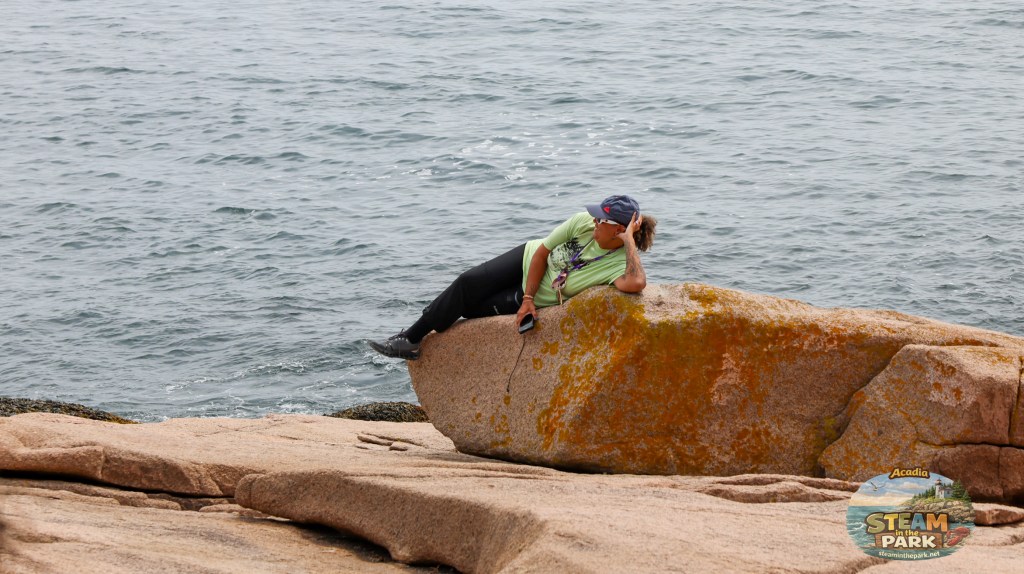
5. Try Ocean Breathing
You don’t need an ocean to practice ocean breathing. 🌊
Invite students to imagine that their breath is moving like a wave.
Try:
Breathe in slowly as the wave comes toward the shore.
Breathe out slowly as the wave rolls back out.
You can pair this with gentle wave sounds or a visual of the ocean.
For younger students, you might simply say:
“Let’s make our breath move like a slow wave.”
For a more sensory experience, give students a shell to hold while they practice.
Ask them to notice:
- What does the shell feel like?
- Is it smooth or rough?
- Is it warm or cool?
- What does it smell like?
- What do you hear when you hold it close?
- What do you imagine when you look at it?
Then guide a short visualization:
“Imagine you’re sitting on a beach. Feel the sand beneath you. Hear the waves. Feel the breeze. Notice the warmth of the sun…”
You have now combined breathing + mindful touch + sound + smell + visualization into one simple activity.
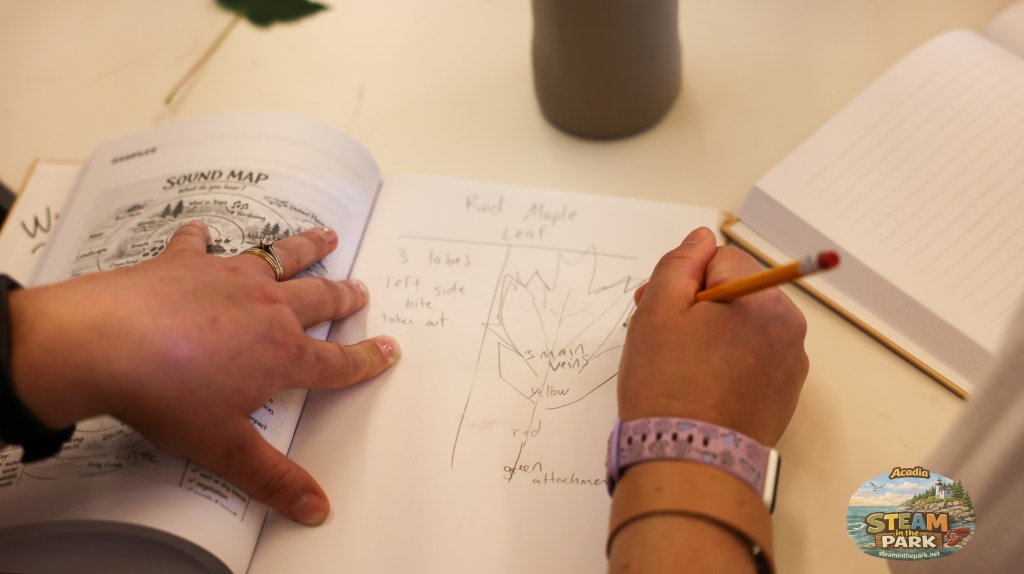
6. Make a Nature Observation Journal
Take students outside with a notebook and give them permission to simply notice.
Instead of telling them exactly what to write, give them prompts such as:
I notice…
I wonder…
I feel…
I hear…
I see…
I wonder what would happen if…
You can make this a five-minute activity or return to the same location throughout the year.
Students might begin noticing things that change over time:
🍂 Leaves changing
🌱 New plants growing
🐛 Insects appearing
🌧️ Changes in weather
🐦 Birds coming and going
Nature journaling can become a beautiful intersection of science, writing, observation, art, and reflection.
And for students who struggle with traditional journaling, drawing and labeling observations can be just as valuable as writing paragraphs.
🎨 TIER 3: HANDS-ON + CREATIVE EXPLORATION
These activities take a little more preparation but give students opportunities to create, experiment, and explore.
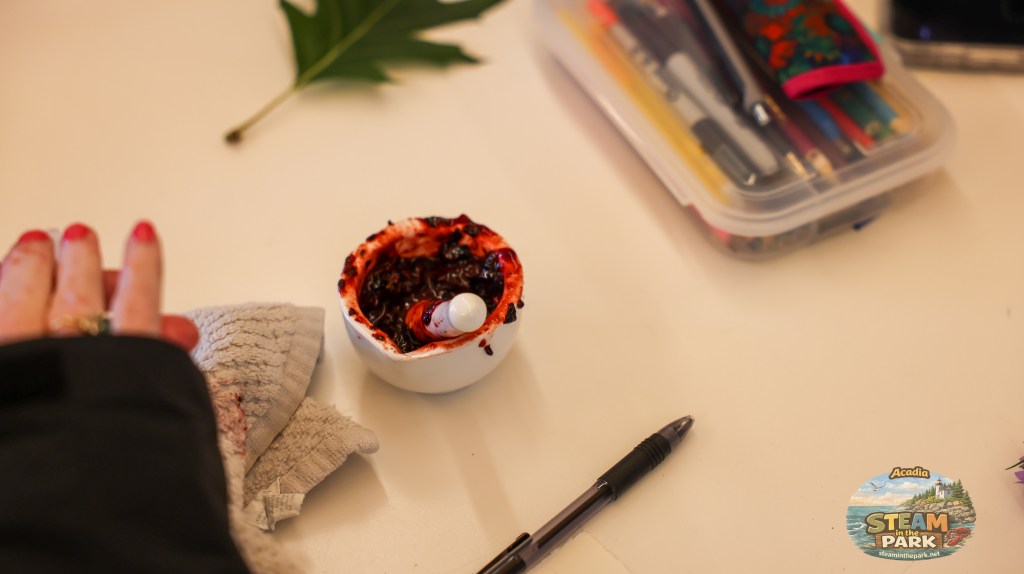
7. Make Nature-Based Paint
Let students become scientists and artists at the same time.
Have them collect natural materials they find on the ground—such as fallen leaves, flowers, or other safe plant materials.
Students can experiment with crushing or grinding materials to release natural pigments and then mixing them with cornstarch to create paint.
You can use this as an opportunity to talk about:
- Color
- Texture
- Pigments
- Observation
- Experimentation
- Where colors come from
Important safety note: Don’t let students collect or handle unknown plants, berries, mushrooms, or other materials that could be poisonous, irritating, or allergenic. Never use materials that students might mistake for food, and check local guidance before collecting natural materials. Adult supervision is essential when using tools such as mortars and pestles.
The goal isn’t to create perfect paint.
It’s to ask:
“What can nature teach us about color/art/emotions/etc?”
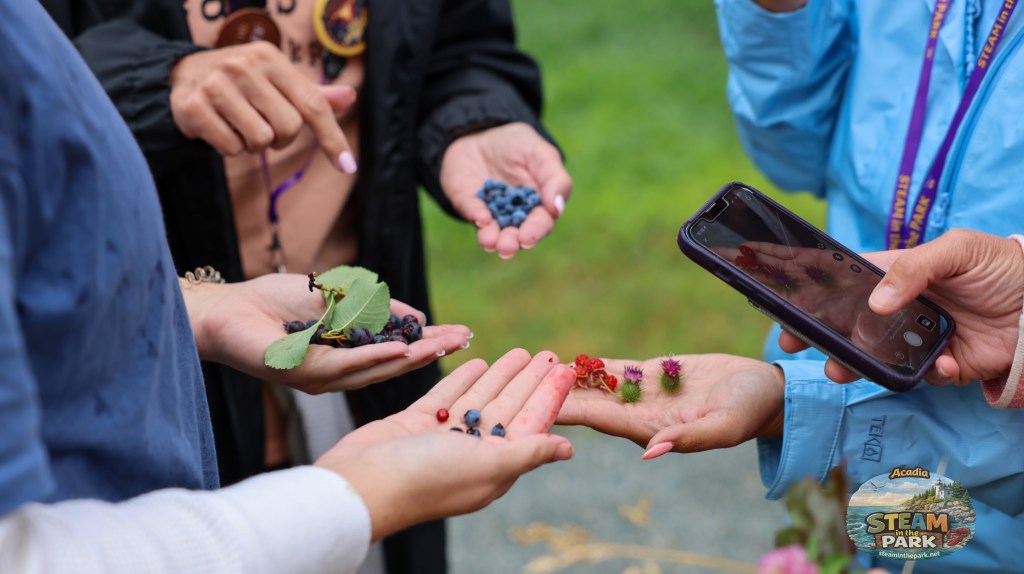
8. Go on a Nature Rainbow Walk 🌈
Give students a challenge:
Can you find every color of the rainbow in nature?
Take students outside and look for one natural object representing each color.
For example:
❤️ Red
🧡 Orange
💛 Yellow
💚 Green
💙 Blue
💜 Purple
Depending on your setting, students might find fallen leaves, flowers, rocks, bark, berries, feathers, or other naturally occurring materials.
Then bring the collection together to create a Nature Rainbow Collage.
You can make this individual, collaborative, or even create one giant class rainbow.
It also gives you an opportunity to talk about perspective:
Did everyone find the same colors?
Which color was hardest to find?
What did you notice when you were specifically looking for color?
Sometimes giving children a simple mission changes what they notice.
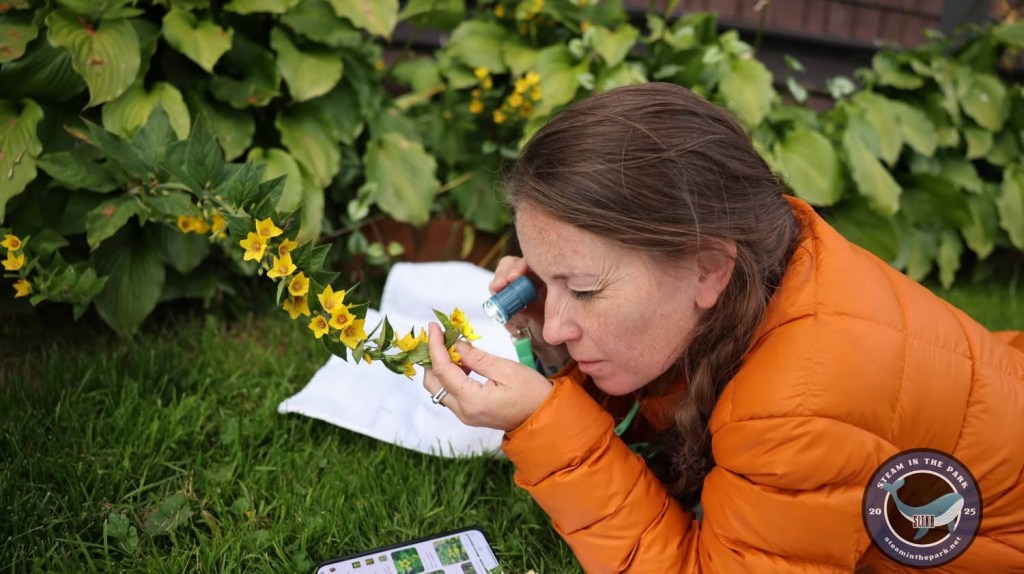
9. Create a Nature-Inspired Art or Mandala
Invite students to collect safe, fallen natural materials and use them to create a temporary piece of art.
They might use:
🍃 Leaves
🌿 Twigs
🪨 Stones
🌰 Acorns
🌸 Fallen petals
🌾 Grass
Students can arrange their materials into patterns, shapes, symbols, or mandalas.
And then comes an important part:
Leave it outside.
Take a photograph of the finished creation rather than bringing it inside.
Wind might move it.
Rain might change it.
Someone—or something—might walk through it.
And that’s part of the lesson.
You can use the activity to talk about impermanence, creativity, flexibility, and letting go of perfection.
Ask:
“What happens when we create something beautiful without needing it to last forever?”
🌿 Nature-Based Learning Doesn’t Have to Be Complicated
One of my favorite things about nature-based learning is that it doesn’t have to be another giant initiative.
You don’t need a forest school.
You don’t need a huge garden.
You don’t need expensive materials.
And you don’t have to be an outdoor education expert.
Start small.
Take your class outside for five minutes.
Put on rain sounds while students work.
Move your calm corner closer to a window.
Give a small group a handful of shells and invite them to notice.
Take a nature walk.
Let students draw what they see.
Ask them to find something they’ve never noticed before.
Nature can be the lesson.
Nature can be the setting.
Nature can be the material.
And sometimes, nature can simply be the pause.


Leave a Reply