
Do you find that the majority of your “referrals” come from teachers who happen to catch you in the hallway when you’re running to the bathroom? It happens! A comprehensive program is a program that has a tiered system of support so we go from firefighters singing one-hit wonders to counselors making a difference.
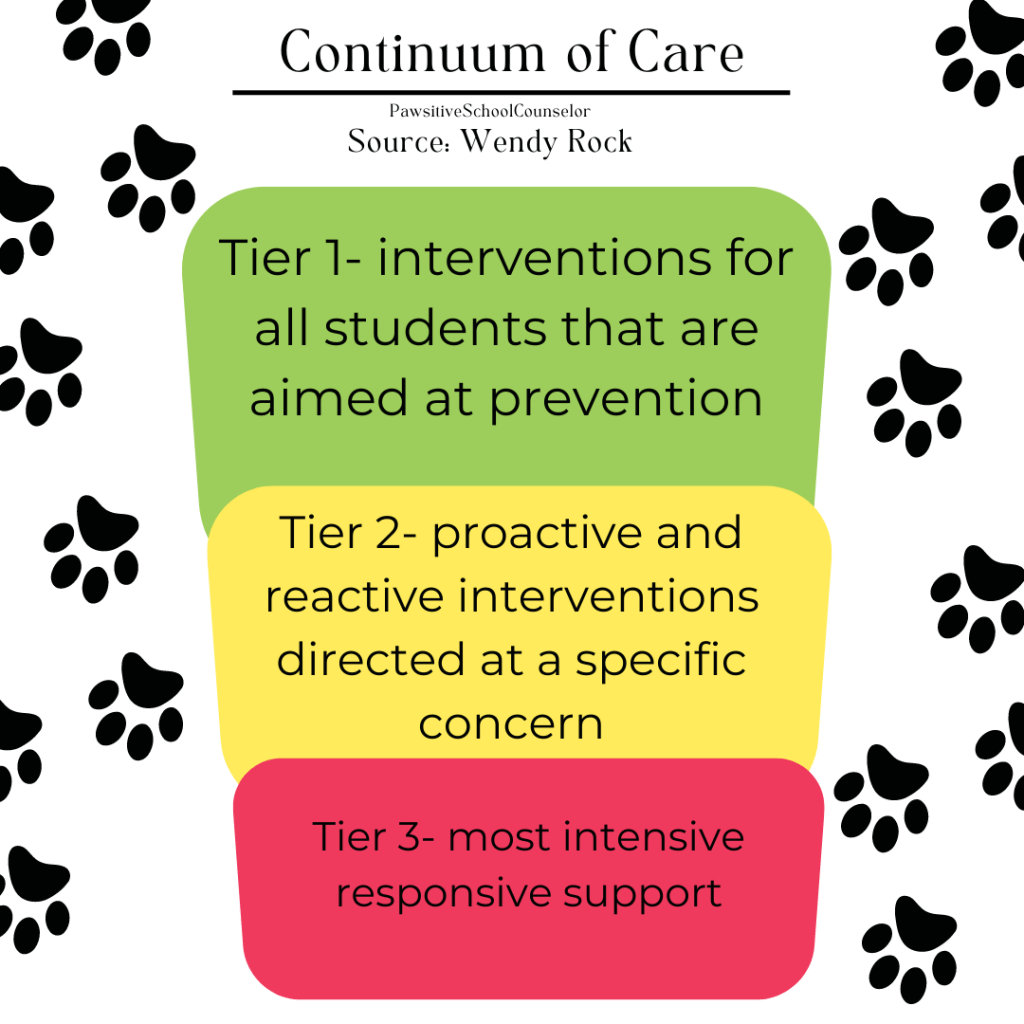
When I present to staff and meet with my administrator at the beginning of the year, I like to share out samples of what my Tiers look like. You can get a sample copy here:
So when we discuss my use of time, it’s important that they understand the majority of my time should be spent in Tier 1. We also talk through the referral process for students who may need Tier 2 or 3 services. As Sara Carlo explained in her small group workshop, “We could argue that all kids need our services but which ones will benefit?”
At our school, we have monthly meetings with a team we call the “Whole Child Support Team.” This team looks at behavior, academics, attendance, and SEL supports to create a plan that supports the child and looks at all the Tiers.
I cross-reference referrals, data, my school goals, attendance reports, and RTI reports helping create a list of students needing Tier 2 services. Those that are in Tier 2, may need an outside referral meaning we are looking at Tier 3 interventions that are not directly provided by me.

It is important to note that school counselors don’t provide long-term therapy. This also includes weekly “counseling sessions or visits.” By doing this not only are you making your role confusing to stakeholders, but you are putting the student you are seeing regularly at a disservice.
What happens when you can’t see them at that time or there is a crisis in your building? Instead, focus on short-term and help them generalize the skills you have taught them in the school and home setting.
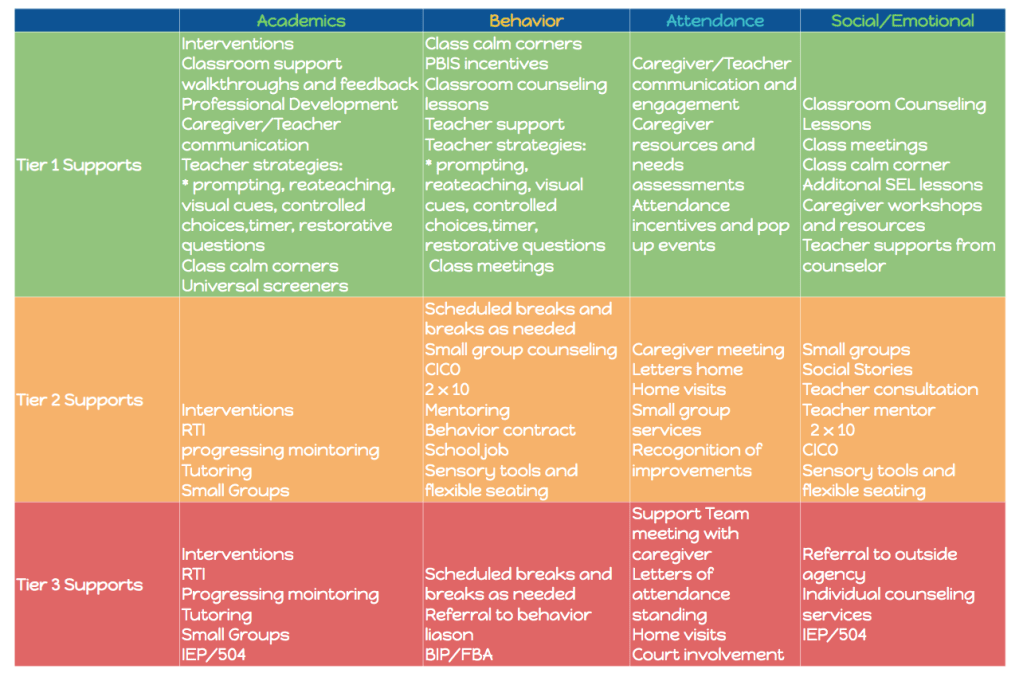
I created this chart with sample interventions at each stage.
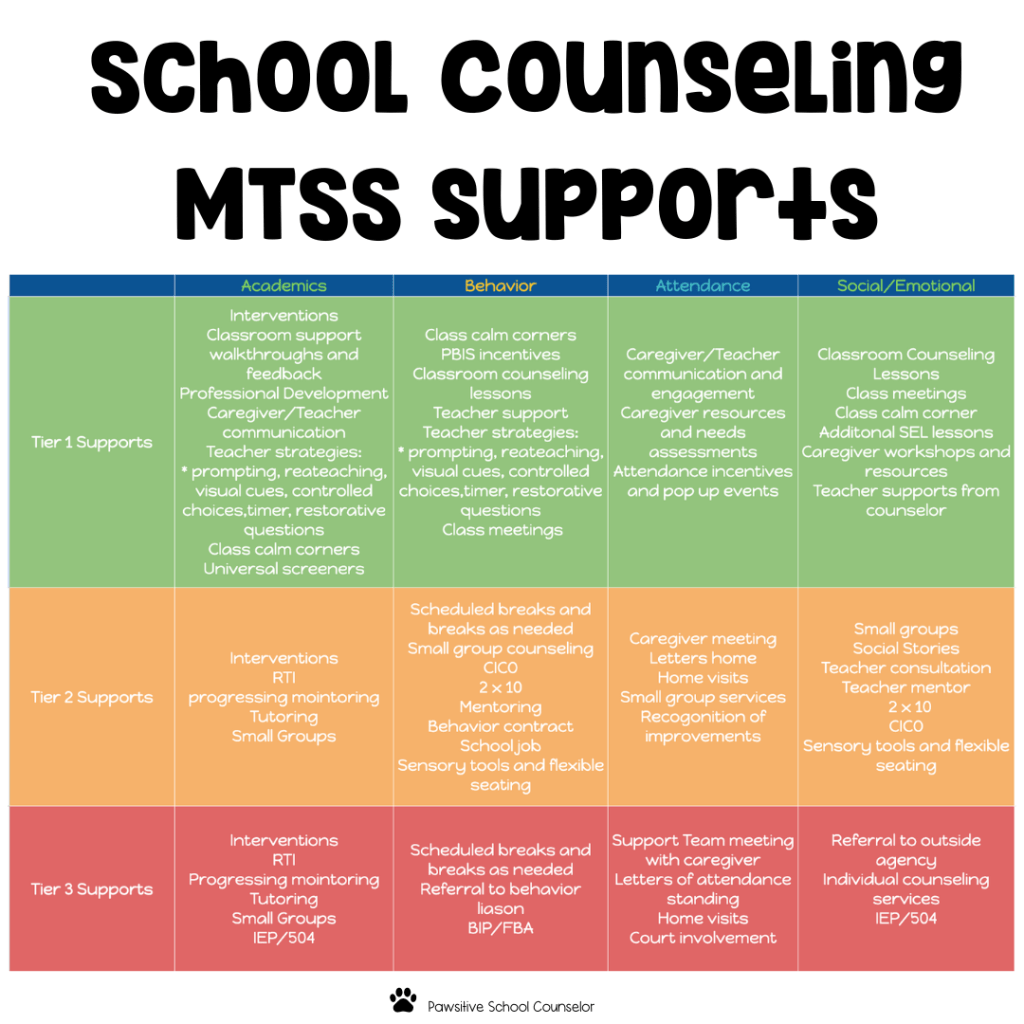
You can make your own copy and edit it by clicking here.
You can find my documentation forms here.
When creating your list of services here are some things to keep in mind:
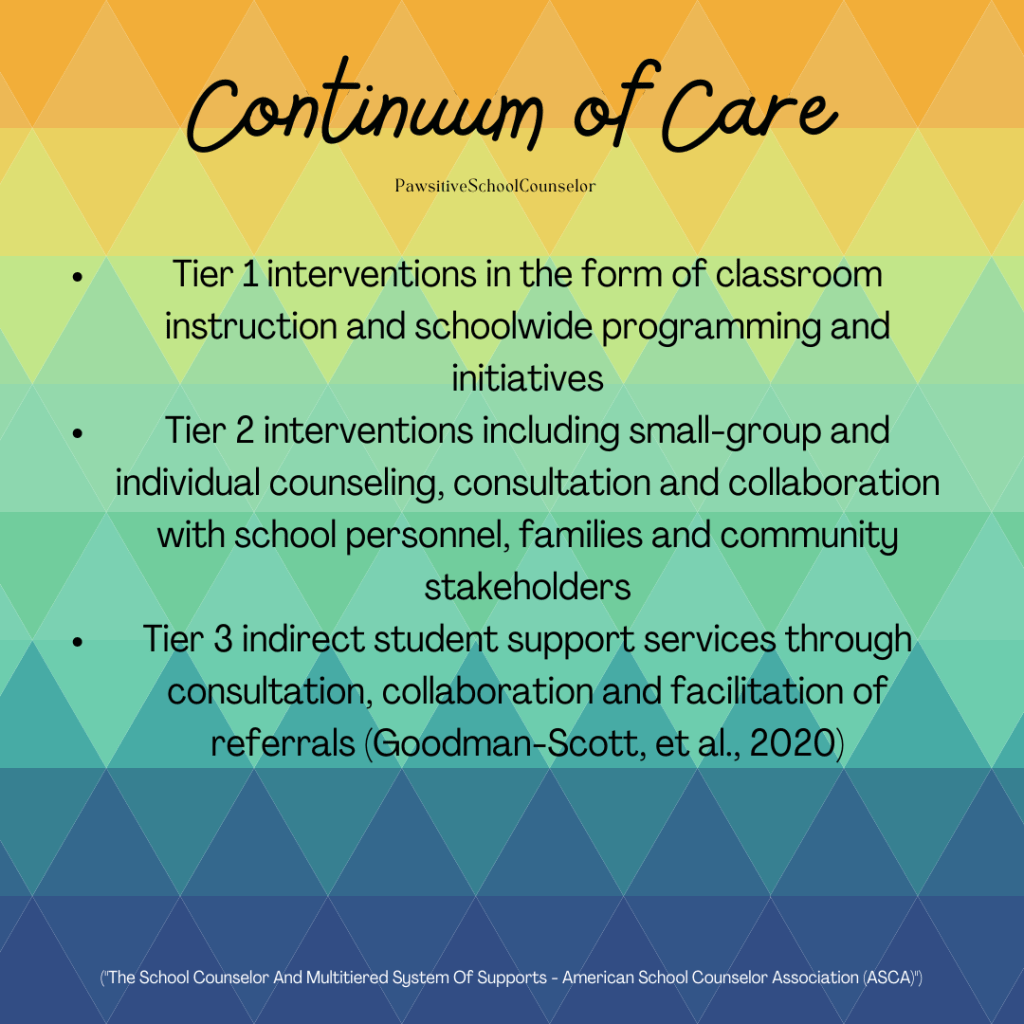
Tier 1- interventions for all students that are aimed at prevention- for example your class lessons
Tier 2- proactive and reactive interventions directed at a specific concern- for example, small groups and individuals
Tier 3- most intensive responsive support- this is consultation and collaboration
What is something your school does to support students? What Tier does it fall under? Share it out!
Shop The Post

Pin For Later


 Pawsitive School Counselor
Leave a reply to pawsitiveschoolcounselor Cancel reply