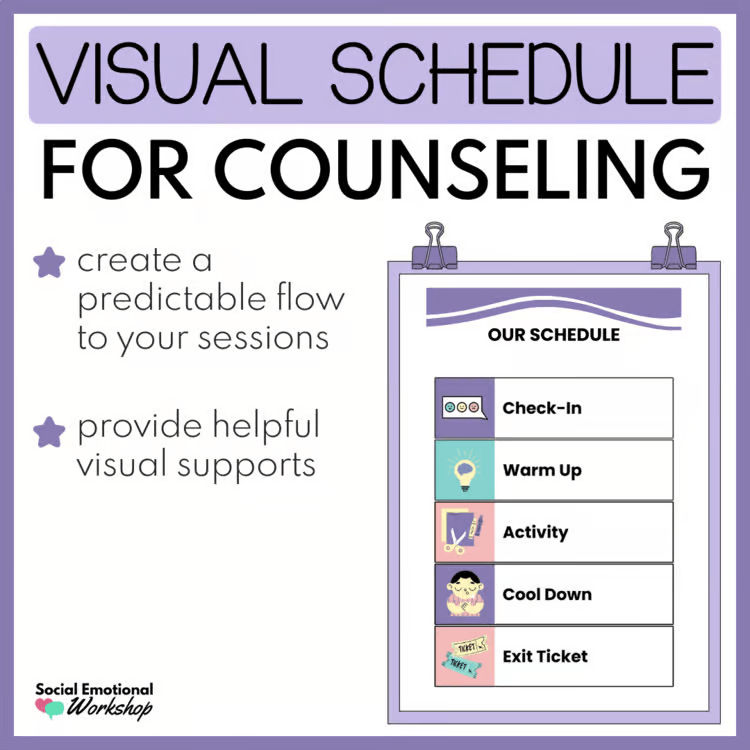
Students thrive when they know what to expect. We often think about routines in the classroom, during schoolwide activities, or in small groups, but structure can be just as important during individual counseling sessions.
A predictable session routine helps students feel safe and comfortable. It also keeps sessions focused and efficient, making it easier for students to return to class feeling supported rather than lingering in the counseling office. While every student and situation is different, having a general framework can help you make the most of your time together.
That said, structure should never become rigidity. Students should guide the session—not the plan. You may intend to read a book, only to realize the student needs the sand tray that day. Be flexible and responsive. The routine provides a roadmap, but your student’s needs determine the route.
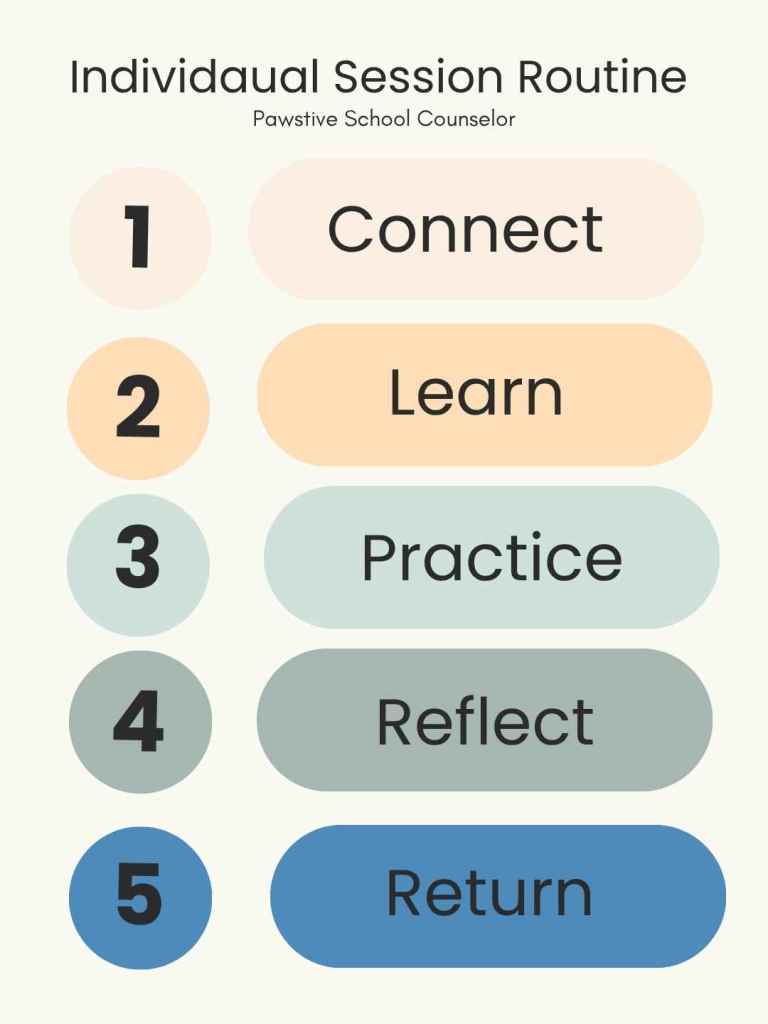
1. Start with a Check-In
A check-in helps students transition into the counseling space and gives you valuable information about how they’re doing.

Highs and Lows
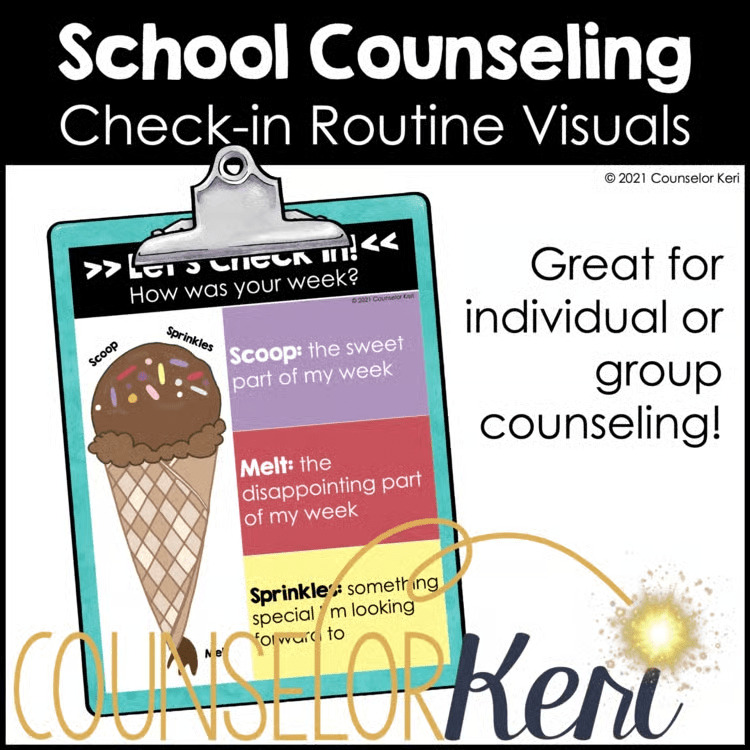
Invite students to share a “peak and pit,” “mountain and valley,” or “sunny and cloudy” moment from their week. These simple prompts encourage reflection and help students practice perspective-taking.
Counselor Keri has some excellent visuals for this.
Feelings Check-In
Use a feelings chart, magnets, stickers, emoji cards, or other visual supports. Ask students to identify one to three emotions they’re experiencing right now. This low-pressure activity builds emotional literacy and self-awareness.
Find some of my office favorites here.
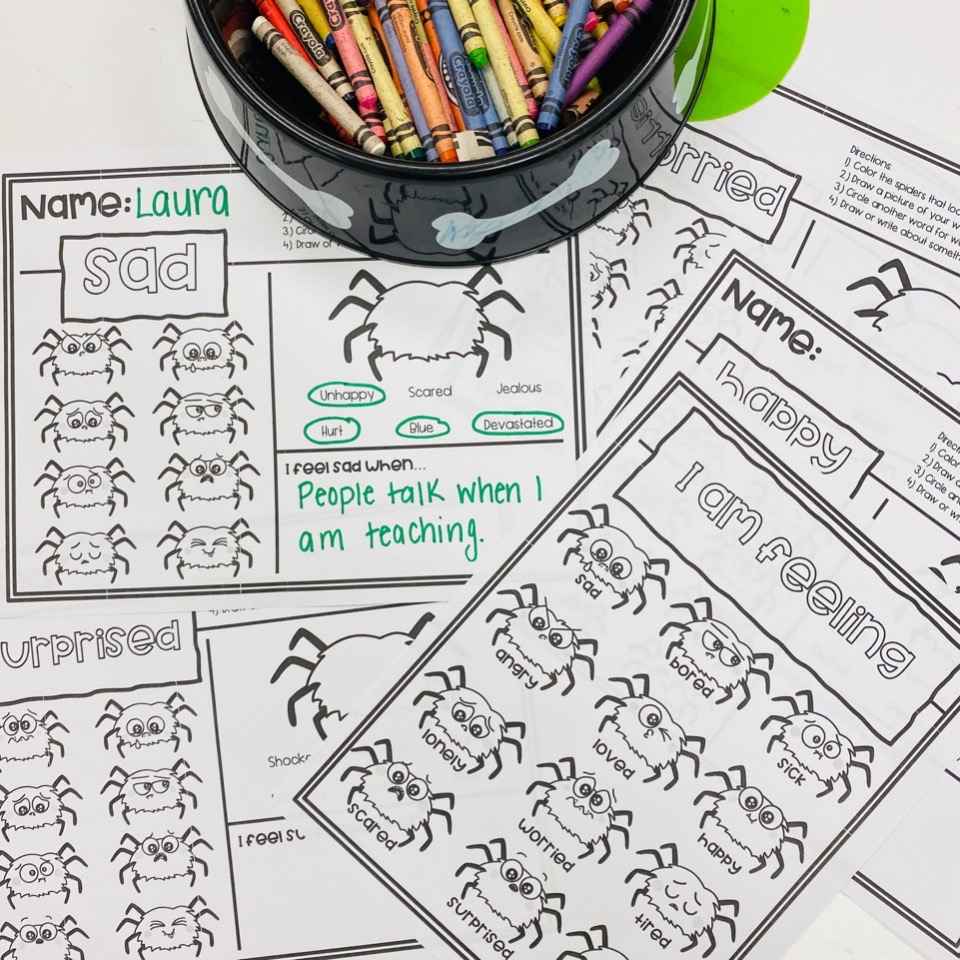
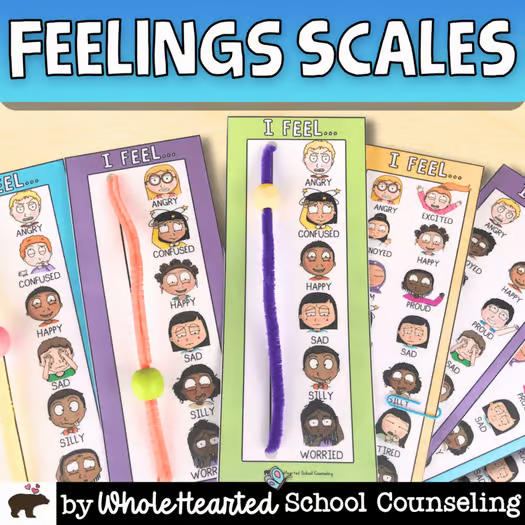
I also love this interactive feelings check in from Whole Hearted School Counseling.
Conversation Starters
Sometimes a simple question can open the door to meaningful discussion:
- “If your week were a color, what color would it be?”
- “What is one thing that made you smile today?”
- “If your feelings were weather, what would the forecast look like?”

Scaling Questions
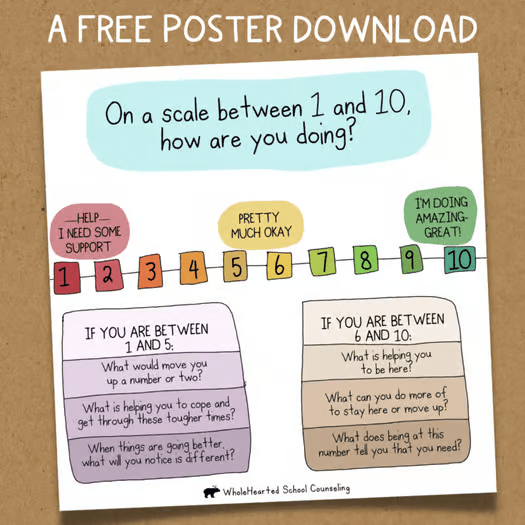
Scaling questions are a quick and effective way to gather information and track progress.
Examples include:
- “How big does the problem feel today on a scale of 1-10?”
- “How confident do you feel about handling this situation?”
- “How much progress have you made toward your goal?”
These questions support self-awareness while also providing useful data points.
Whole Hearted School Counseling has one of my favorite scales and it’s a FREEBIE.
Hands-On Check-Ins
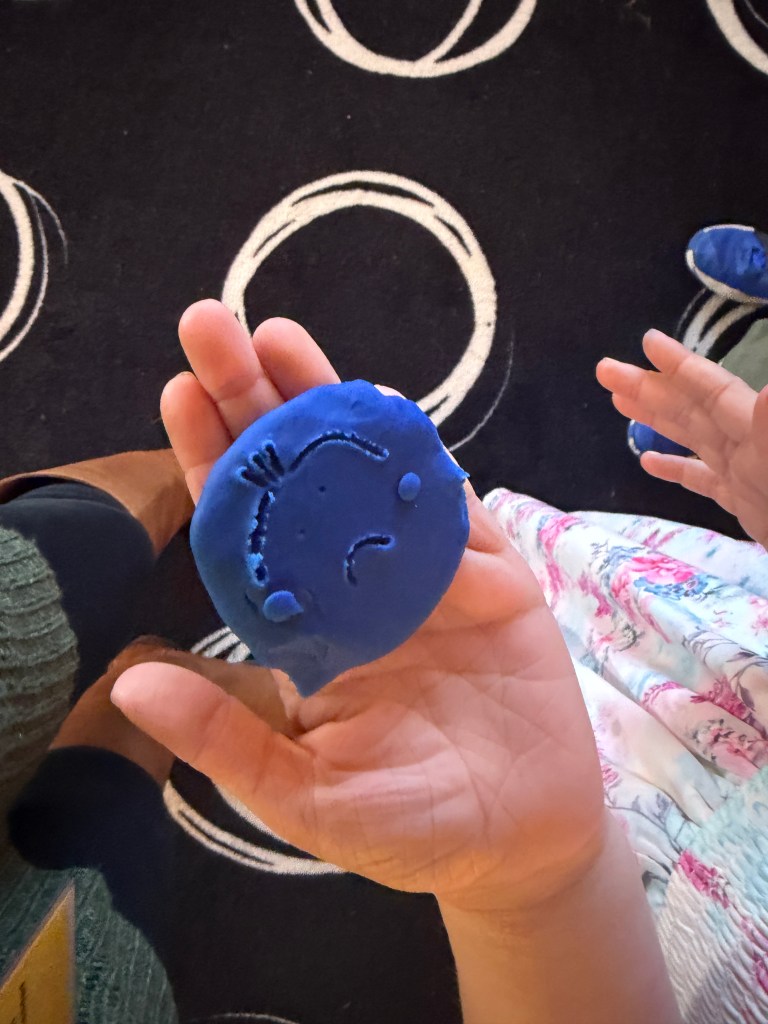
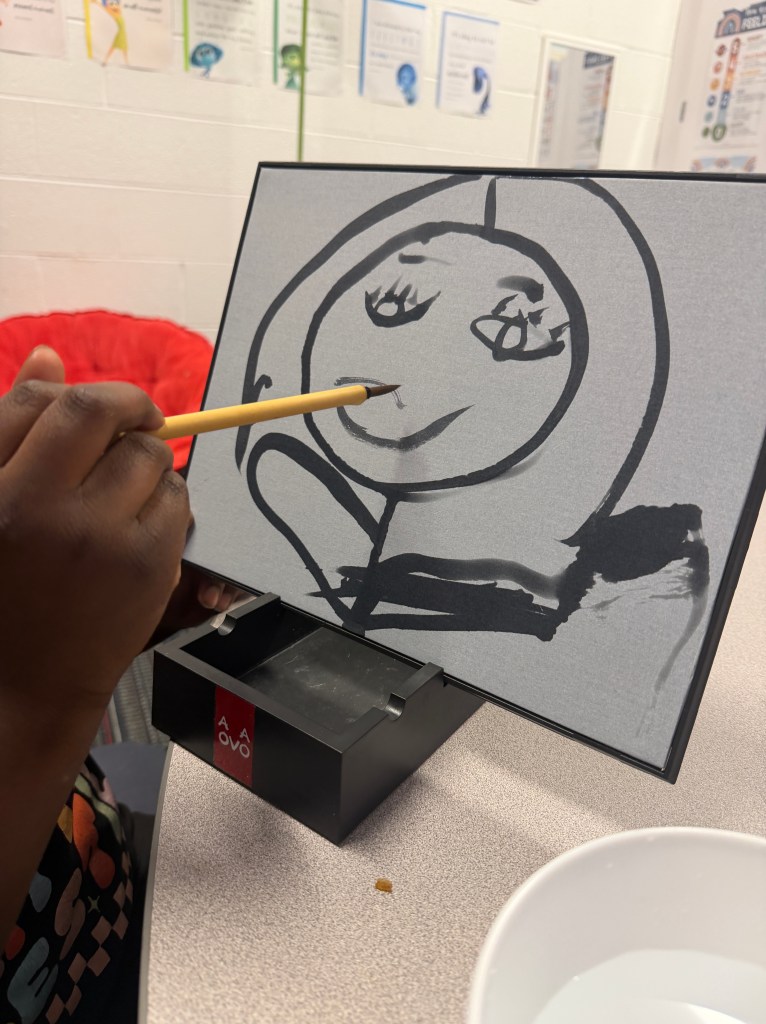
Some students communicate best through play and creativity. Try offering playdough and asking students to:
- Sculpt how they’re feeling
- Create something that represents their week
- Make a face that matches their current emotion
These activities often spark conversation naturally and reduce the pressure of direct questioning.
2. Warm Up and Introduce the Concept
Once you’ve checked in, it’s time to introduce a skill, concept, or theme related to the student’s needs.

This might include:
- Reading a picture book
- Completing 1-2 workbook chapters together
- Playing a game
- Using a visual demonstration
- Creating something together
This is often where I pull out the “fun stuff”—playdough, pipe cleaners, index cards, paper bags, tissue boxes, LEGO bricks, string, coffee filters, games, sandtray, dollhouse, and other hands-on materials. (click on the links to for examples of how to use each of these.)
For example, if a student is struggling with self-talk, I might introduce cognitive-behavioral (CBT) concepts using toy cars or dominoes to demonstrate the connection between thoughts, feelings, and actions. A book such as Taco Falls Apart can also provide an engaging way to discuss flexible thinking and self-compassion.
If a student is feeling overwhelmed by problems, I may use a rock and a ball of playdough to discuss the difference between situations we can change and situations we must learn to cope with.
The goal isn’t simply to talk about a concept—it’s to help students experience and understand it in a meaningful way.
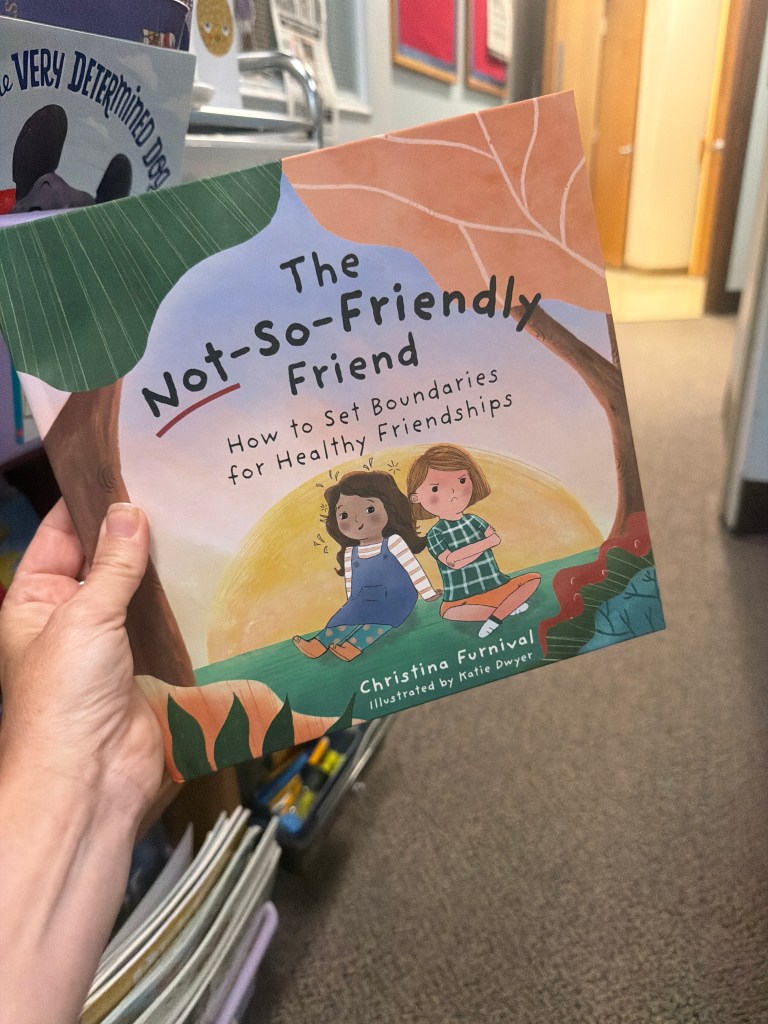
I also love using books to help kick off a discussion- asking thoughtful questions to help them relate and reflect. Looking for a good book? Check out my database.
3. Teach and Practice the Skill
This is where explicit skill instruction happens.

Depending on the student’s goals, you might teach:
- Coping skills
- Breathing strategies
- Helpful thinking patterns
- Problem-solving skills
- Conflict resolution
- Communication skills
- Emotional regulation strategies
The key is practice.
Students rarely learn a new skill simply by hearing about it. They need opportunities to try it out.
Some ways to practice include:
- Role-playing
- Using puppets or stuffed animals
- Acting out scenarios
- Playing games
- Sorting examples and non-examples
- Creating plans for real-life situations

For example, if you’re teaching I-Messages, students can practice using them in common school scenarios. If you’re working on helpful thinking, students can identify unhelpful thoughts and generate realistic alternatives.
4. Check Progress, Give Feedback, and Refine the Plan
Before ending the session, revisit the student’s progress.
Return to your scaling question:
- How big does the problem feel now?
- How ready are you to try your plan?
- How confident do you feel about using this skill?
If the student’s number hasn’t changed, that’s okay. It simply gives you more information.

This is also a great opportunity to provide coaching and feedback. Perhaps an I-Message still sounds a bit passive-aggressive. Maybe a replacement thought feels unrealistic.
Students often benefit from one more round of practice before leaving.
Together, review:
- What they learned
- What they plan to try
- Potential obstacles
- Supports that can help
Even a brief plan increases the likelihood that students will use their new skills outside your office.
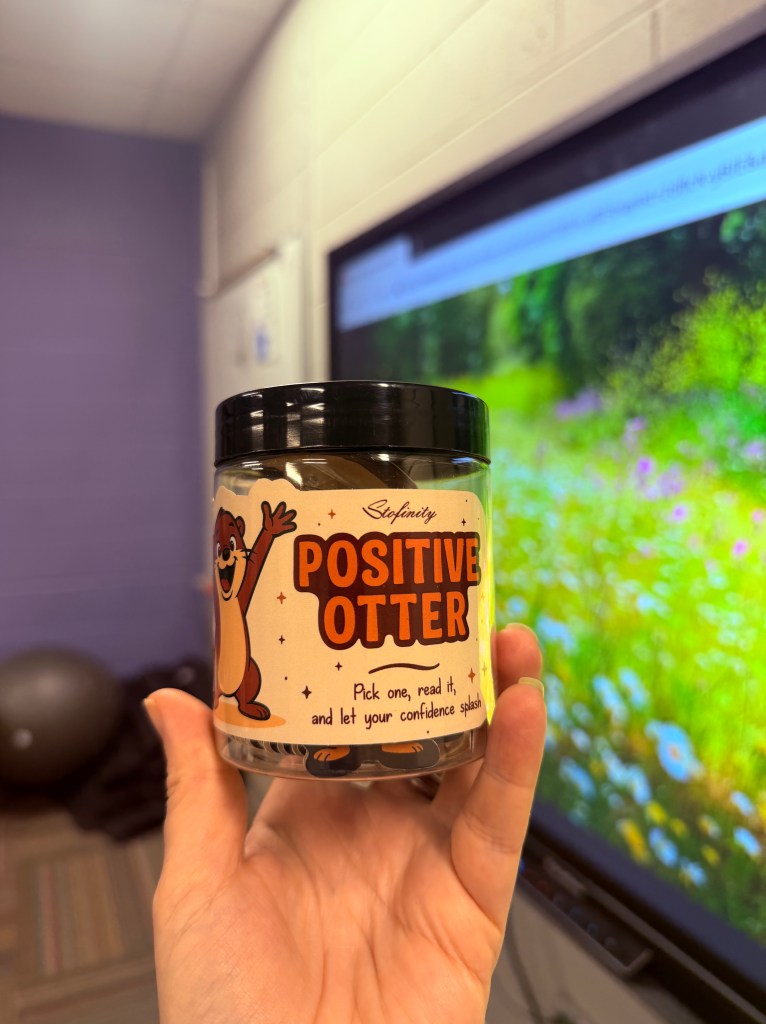
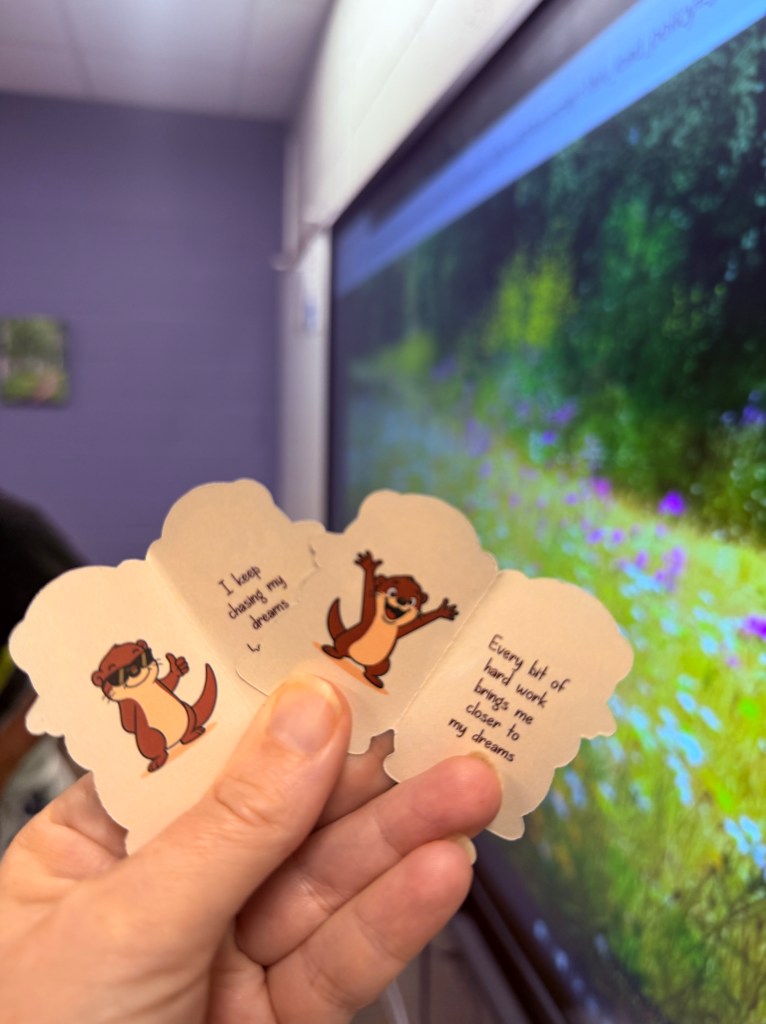
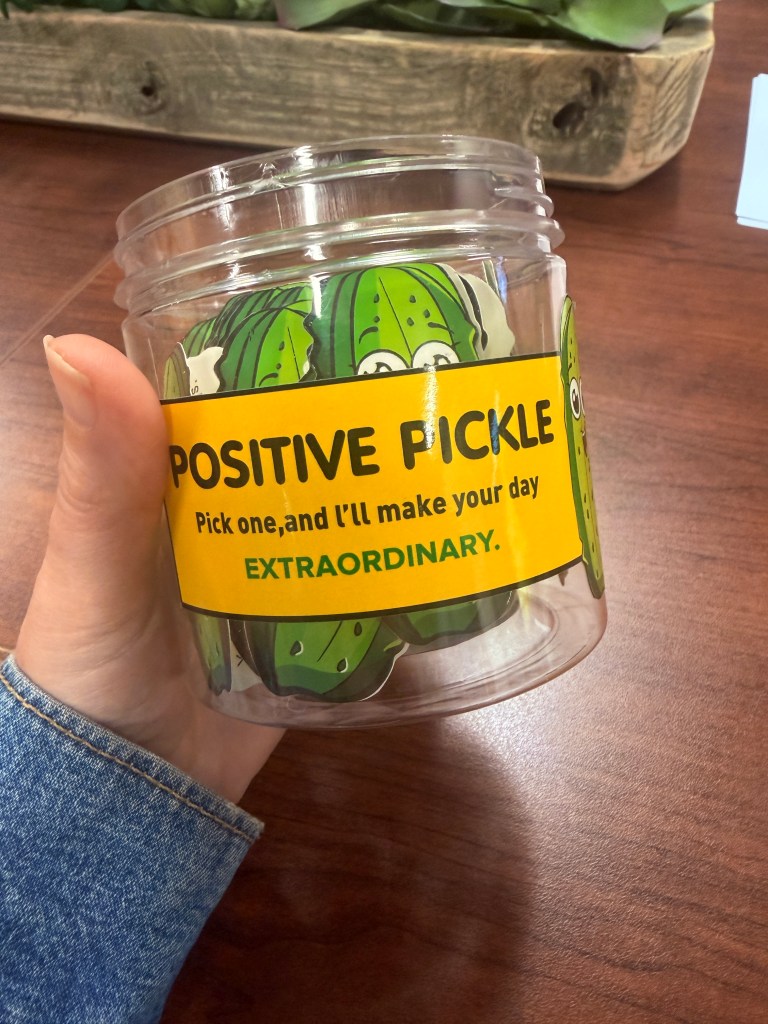
One of my counselor friends found these fun positivity notes on Amazon– let students pick one to end with- like a fortune cookie- to keep the encouragment going even after they leave your office.

Ask One Final Question
I often ask:
“Is there anything else you want me to know?”
This simple question creates space for important thoughts that may not have surfaced earlier.
5. End with a Cool-Down
Transitions matter.
Before students return to class, help them shift back into their school day.

Regulate Before Returning
A quick regulation activity can help students leave feeling calm and ready to learn.
Examples include:
- A breathing exercise
- Progressive muscle relaxation
- Stretching
- A short movement break
- Mindful noticing activities
- Positive affirmations
- Tapping
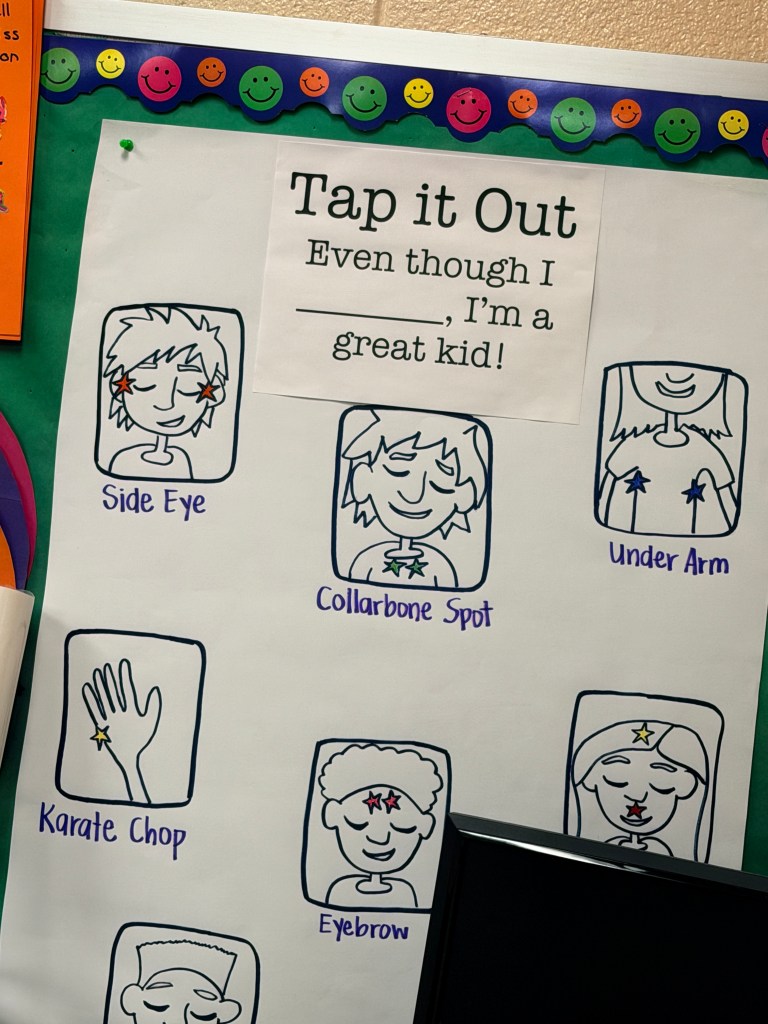
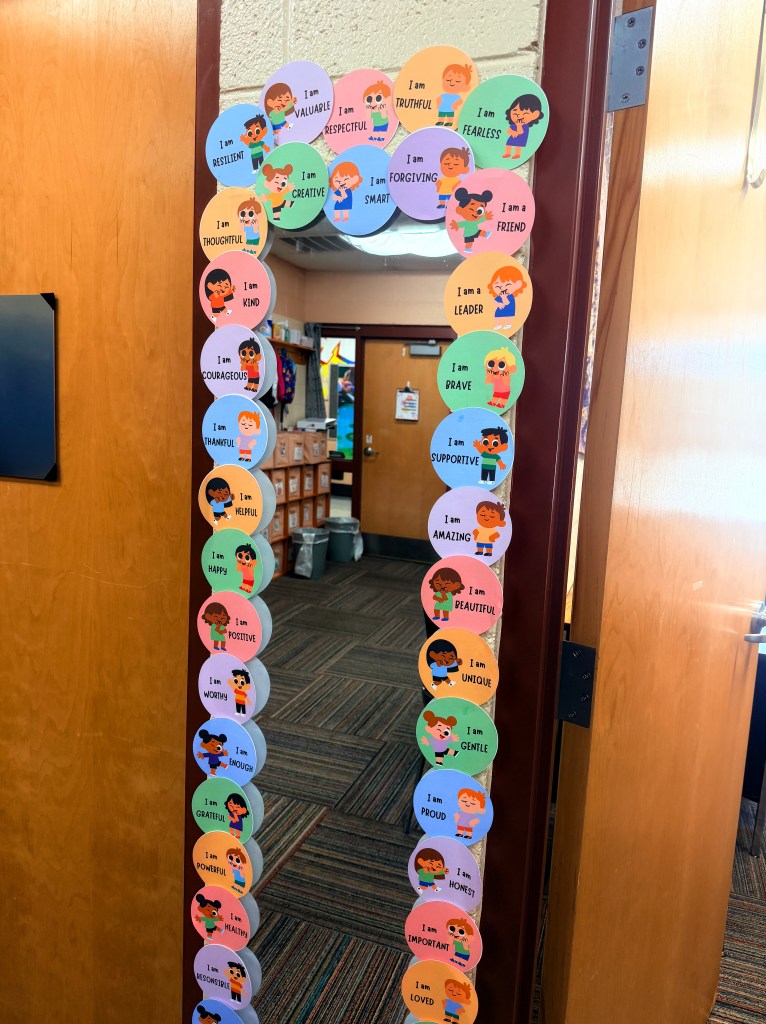
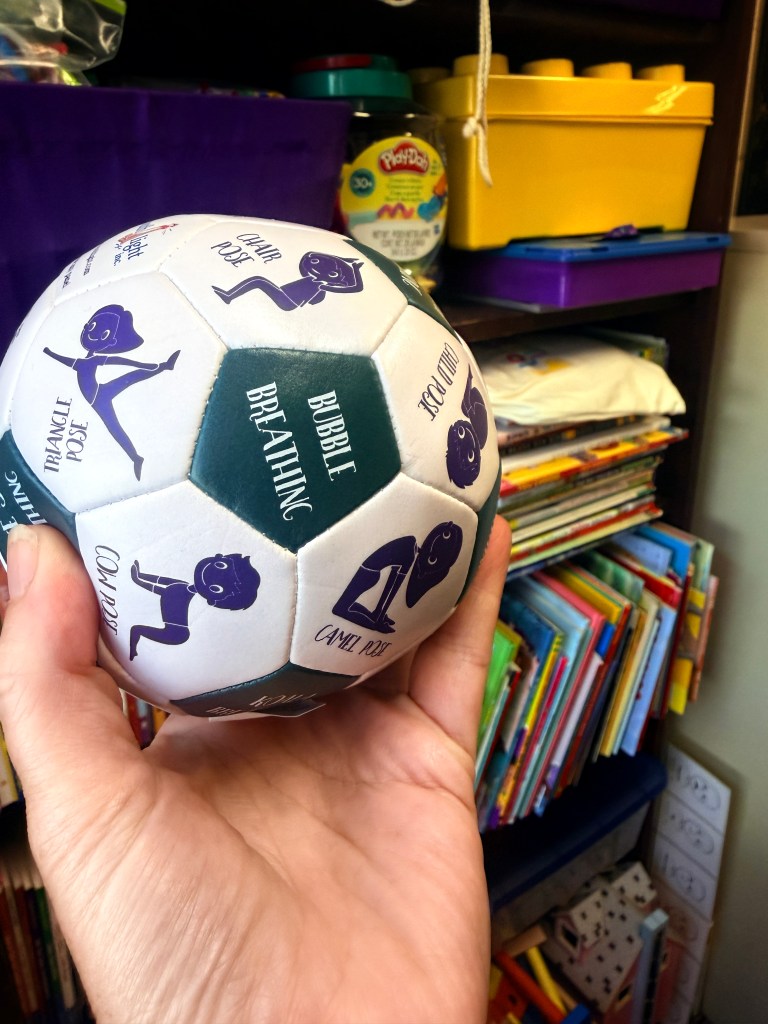
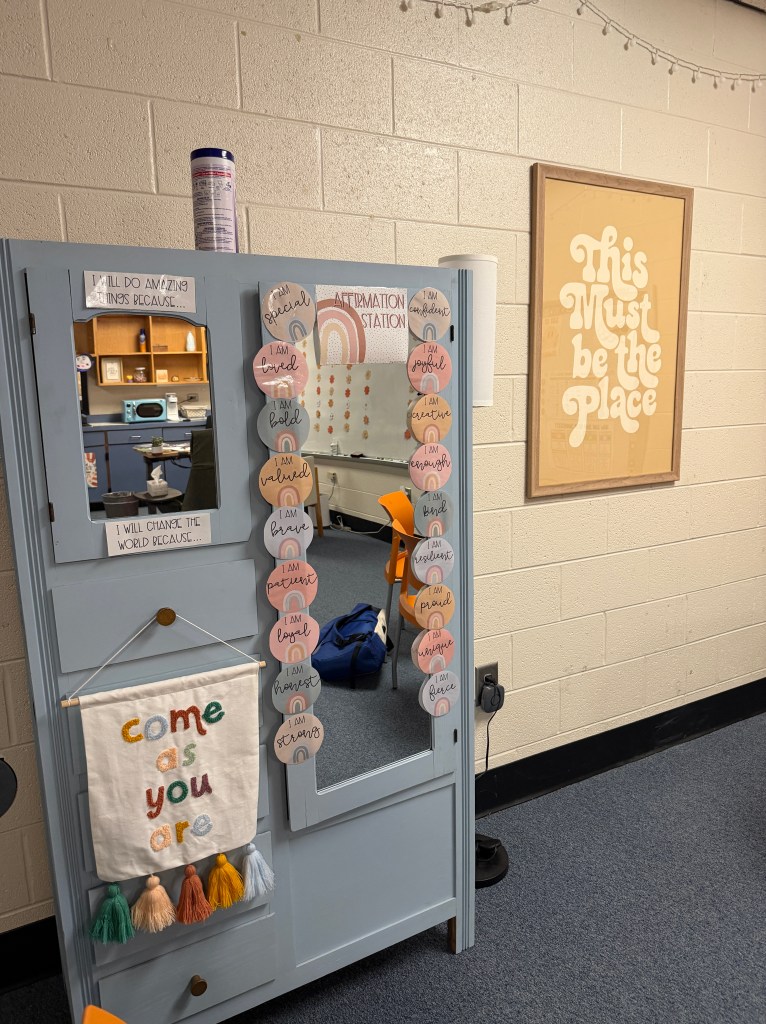
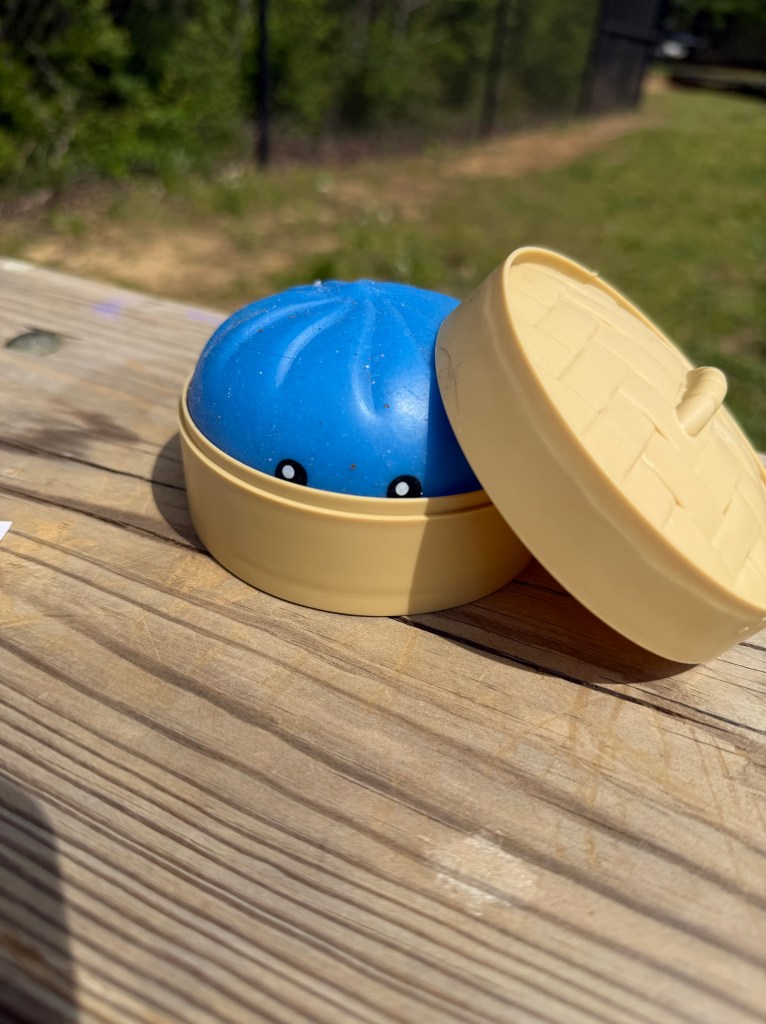

Sometimes students simply need a few quiet minutes. I’ve had students listen to calming music while a timer runs. Other times we’ll begin the transition back to class together by playing a mindful game of “I Spy” as we walk through the hallway.
The goal is to ensure students leave regulated, not rushed.
What About Shorter Sessions?
Not every student needs a full 30-minute session, and realistically school schedules may only allow a shorter visit.
Many school counselors regularly hold quick check-ins, walk-and-talk meetings, or solution-focused conversations in the hallway, cafeteria, or on the playground.
Cheerleading, a strategy from Solution-Focused Brief Therapy is one I frequently use:
- “Is the problem still a problem?”
- “If not, wow! How did you solve it?”
- “If yes, what’s one small step you could take next?”
This simple framework helps students recognize their strengths, identify successes, and create manageable action steps.
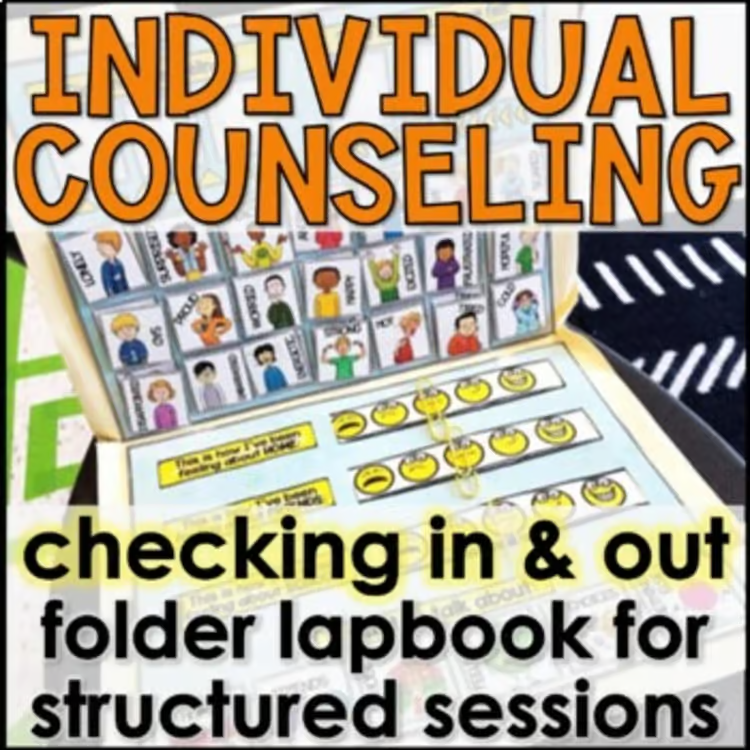
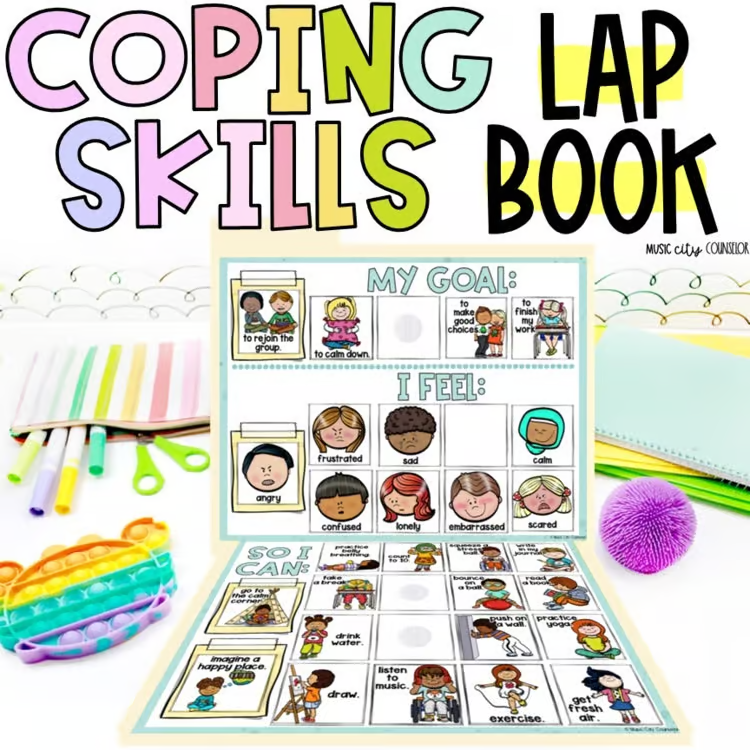
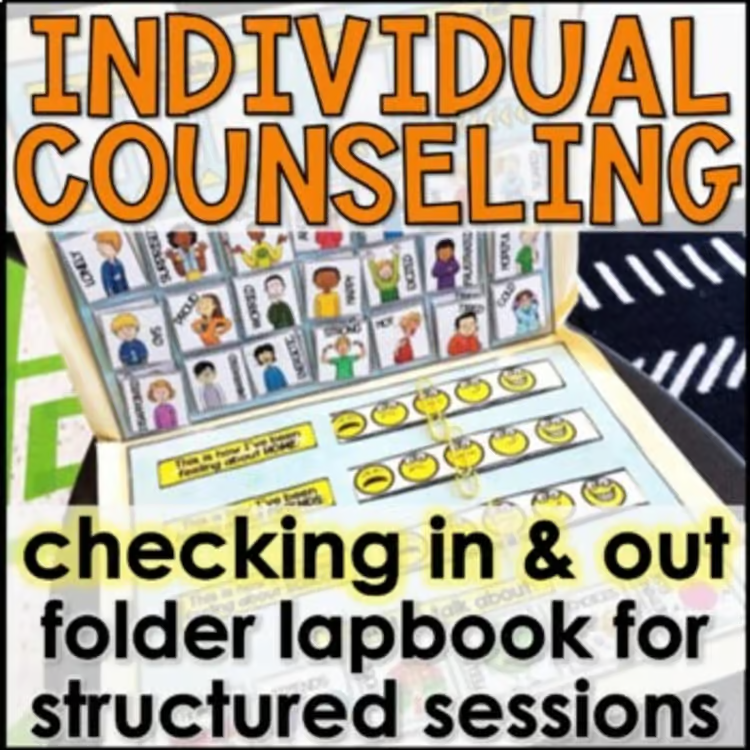
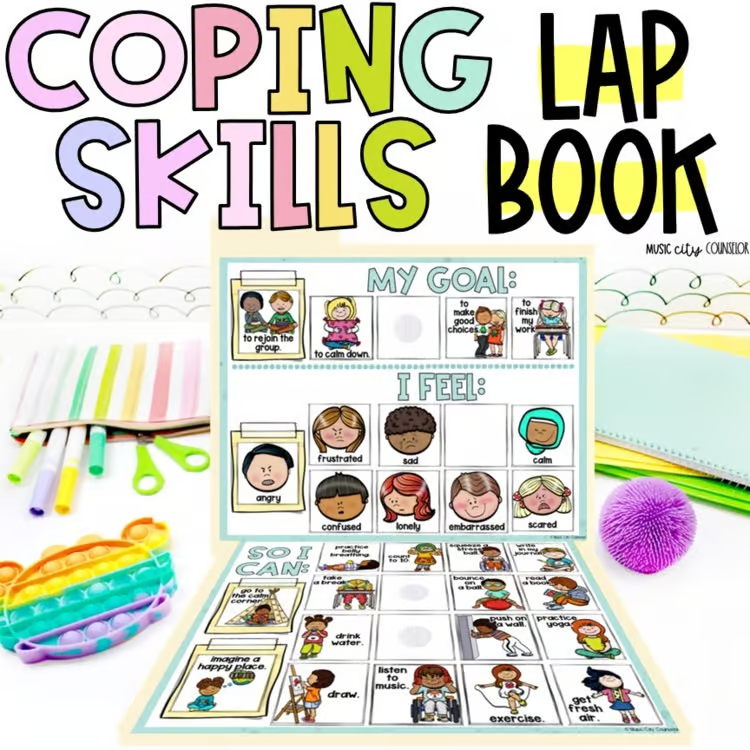
For brief visits, I also love using lap books and visual check-in tools that provide structure while keeping the conversation focused and efficient. Here are some of my favorites:
Favorite Resources For More
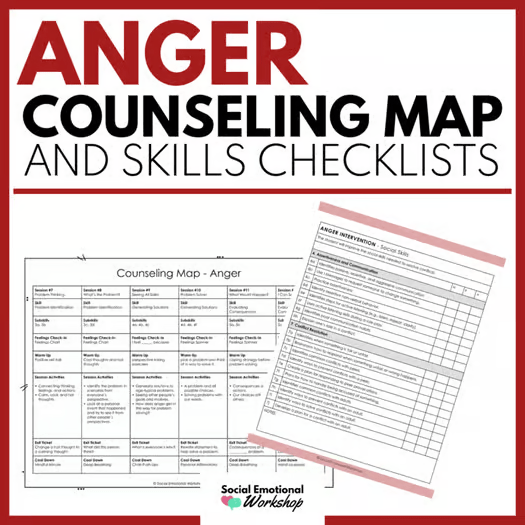
I am always learning and adapting. Here are some more of my favorite counselors (and resources) who have helped inspire and shape the work I do.
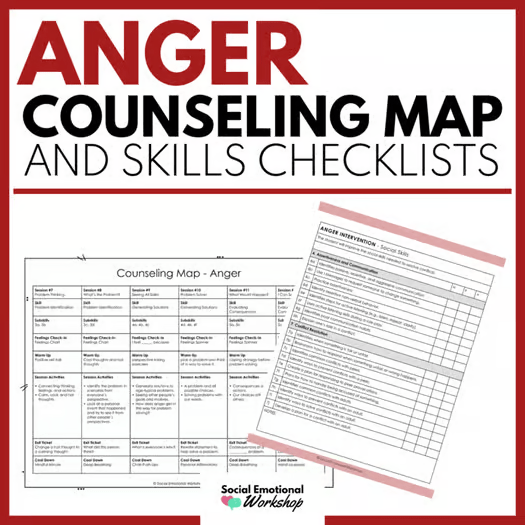
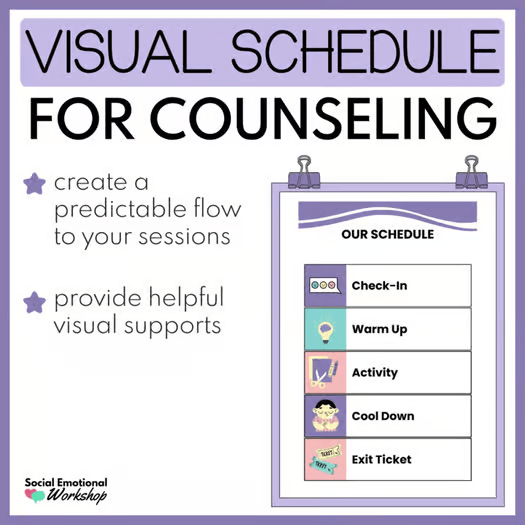
Social-Emotional Workshop
Counselor Up
Final Thoughts
You don’t need a complicated counseling session plan. In fact, some of the most effective sessions follow a simple rhythm:
Check In → Introduce a Concept → Practice a Skill → Review Progress → Cool Down
When students know what to expect, they often feel safer, engage more fully, and develop greater confidence in the counseling process. The structure creates predictability, while your flexibility allows you to meet students exactly where they are.
Pin For Later
Shop The Post


Leave a Reply