Executive function skills—like planning, focus, self-regulation, and flexible thinking, are the building blocks kids use to manage emotions, solve problems, and navigate everyday challenges.
While these skills can feel abstract, one of the most powerful (and enjoyable) ways to support them is through play and stories. Books help children reflect, make connections, and build self-awareness, while games offer hands-on opportunities to practice skills like perseverance, impulse control, and strategic thinking in real time.
In this post, I’m sharing favorite picture books and games that make executive function skills visible, approachable, and fun for kids, families, and classrooms alike.
Organization
Games like scavenger hunts and books that highlight organized vs. messy behavior help students practice noticing, sorting, prioritizing, and keeping track of materials in a fun, low-pressure way.
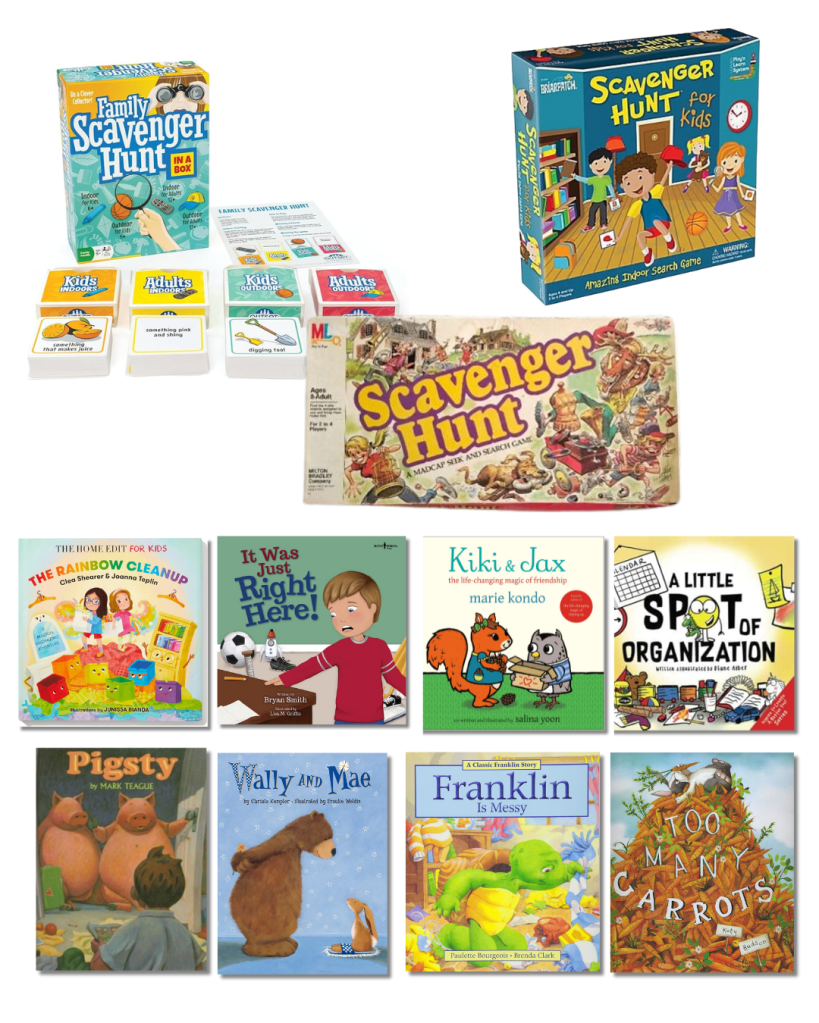
The Rainbow Cleanup by the Home Edit- talk about cleaning your room and keeping it clean and sorting items according to the colors.
“It Was Just Right Here” by Bryan Smith– talk about the consequences of being disorganized.
Kiki & Jax: The Life-Changing Magic of Cleaning Up by Marie Kondo– two very different friends, too very different space. Use it to talk about the joy of organization.
“A Little Spot Of Organization” by Diane Alber– talk with kids about organizing their room, their time, and thoughts.
“Pigsty” by Mark Teague- use it to talk about cleaning a messy room.
“Wally and Mae” by Christa Kempter– talks about differences in friends and organization styles.
“ Franklin Is Messy” by Brenda Clark- talks about how being so messy can lead to consequences like never being able to find what you need.
“Too Many Carrots” by Katy Hudson– use it to talk about having too much of something and minimizing.
Self Regulation & Self Monitoring
Movement + decision-making = regulation skills. Games that require careful movement and thoughtful choices help kids slow down, tune in, and manage their actions.
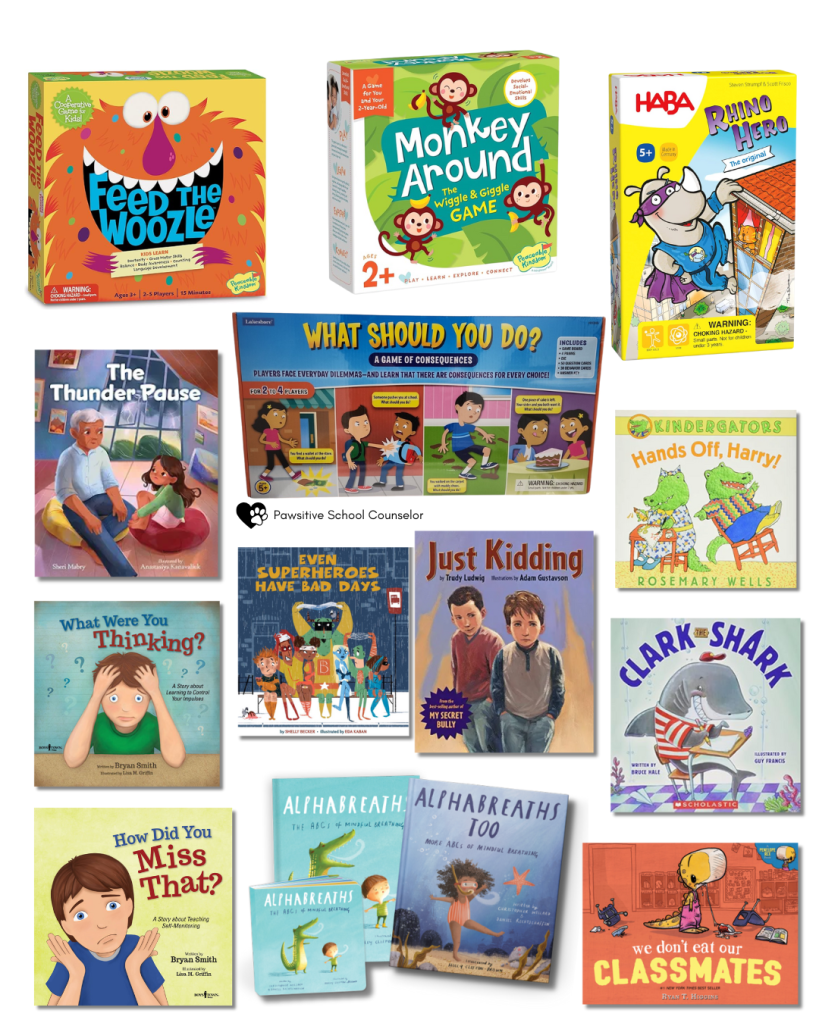
“Even Superheroes Have Bad Days” by Shelley Becker– use it to talk about emotional acceptance, self regulation, self-care and safe coping skills. Partner with my book companion.
“What Were You Thinking “ by Bryan Smith– Teaches students a strategy of four simple steps for stopping, thinking, decision-making, and choosing the right behavior.
“Clark The Shark” by Bruce Hale– there are so many talking points like impulse control, following expectations, and how your self control (or lack of) impacts those around you.
“We Don’t Eat Our Classmates” by Ryan Higgins– use it to talk about temptation and having empathy. Partner with my book companion.
“How Did I Miss That” by Bryan Smith– the importance of slowing down, being accurate, and double-checking one’s work. Use it to talk about self monitoring.
“Alphabreaths: The ABCs of Mindful Breathing” by Christopher Willard– there is an entire series to teach kids different mindful breathing techniques.
“The Thunder Pause” by Sheri Mabry- use it to talk about taking a “pause” to calm down.
“Hands Off Harry” by Rosemary Wells- a great book about keeping your hands to yourself and how kids can make the decision to change.
“Just Kidding” by Trudy Ludwig– help foster empathy and get older students thinking about the jokes they make, how those jokes impact others, and stopping to think before they make them.
Attention and Focus
Fast-paced listening games like “Boom, Clap, Snatch” and “I Have, Who Has” build attention, impulse control, and active listening as students focus on cues and ignore distractions.
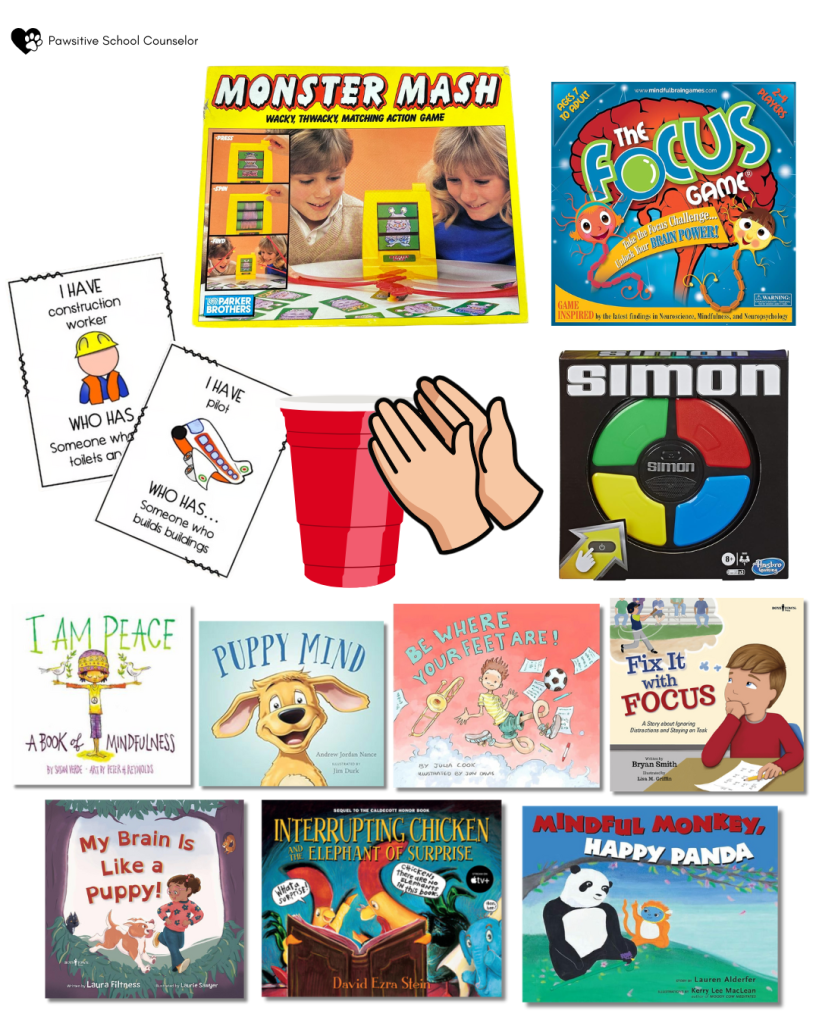
“My Brain Is Like A Puppy” by Laura Filtness– there are so many talking points including: mindfulness and being present, academic/study skills, ignoring distractions, having healthy work habits, and fostering empathy. Find the book companion here.
“What Does It Mean to be Present? “ by Rana DiOrio– use it to talk about mindfulness, kindness, and being in the present moment.
“Be Where Your Feet Are” by Julia Cook– use it to talk about focusing your thoughts.
“Mindful Monkey, Happy Panda” by Lauren Alderfer– introduces kids to the concept of mindfulness.
“Interrupting Chicken (series) by David Ezra Stein- there are currently 4 books in this series about a chicken who has a hard time waiting for his turn to speak, and not interrupting.
“I am Peace” by Susan Verde– learn how to manage their emotions, make good choices, and balance their busy lives by learning to be mindful.
“Puppy Mind” by Andrew Nance– a puppy teaches a little boy how to calm himself through breathing when he feels anxious, distracted, or upset. Note: The illustrations and analogy may take some scaffolding for kids to understand.
Time Management and Task Initiation
Games like Perfection, Outfoxed!, and similar activities build foundational time management skills by requiring players to prioritize tasks, make quick decisions, and work efficiently under pressure or with limited resources.
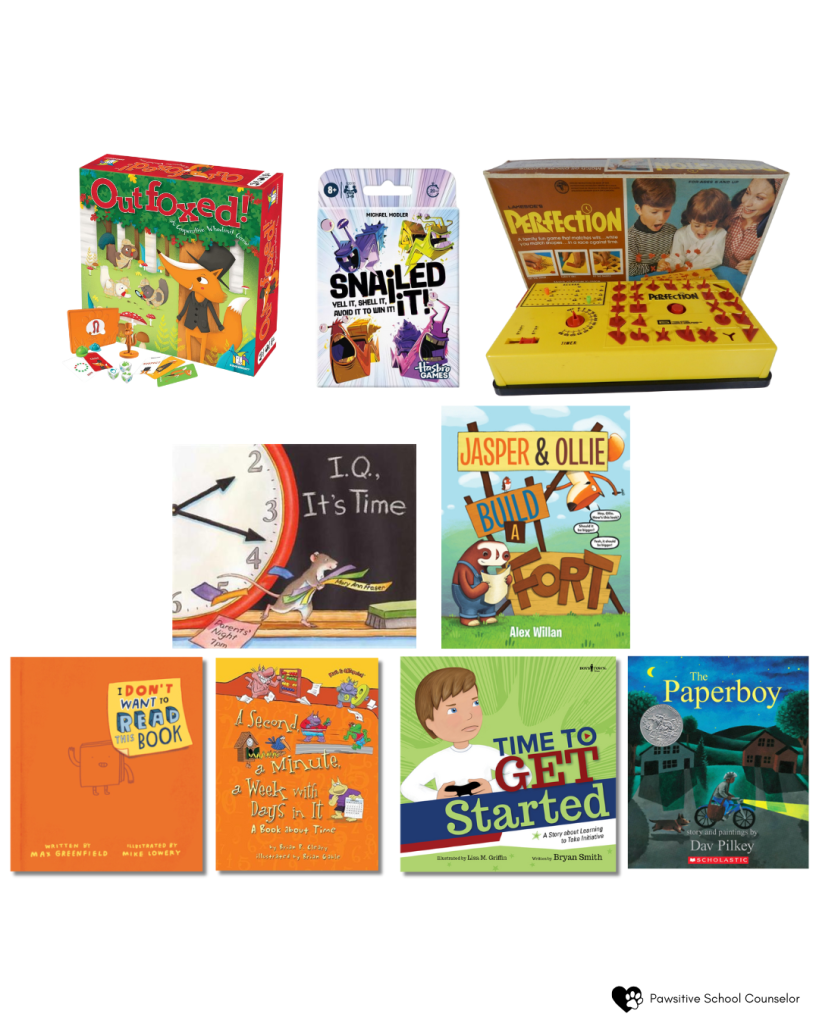
“A Second, a Minute, a Week with Days in It: A Book about Time” by Brian Cleary-introduces the idea of measurement of time, from seconds, minutes, and hours up to decades.
“I. Q. It’s Time” by Mary Ann Fraser– teaches kids how to tell time. Use it to talk about time management and completing daily tasks.
“Time To Get Started” by Bryan Smith– teaches kids 4 steps to taking initiation.
“Jasper & Ollie Build A Fort” by Alex Willan– Best friends Jasper, a quick and feisty fox, and Ollie, a slow and deliberate sloth, decide to build forts in the yard. Use it to talk about different approaches to starting and finishing tasks.
“The Paperboy” by Dav Pilkey- the story of a boy with an early morning job and how he finds the serenity in the early hours.
Metacognition
Metacognition is the ability to think about your own thinking—notice what’s working, what’s not, and adjust your approach.
Because games require players to keep going until the end, they naturally support perseverance. Along the way, kids practice metacognition, flexible thinking, and self-talk as they reflect, regroup, and try again.
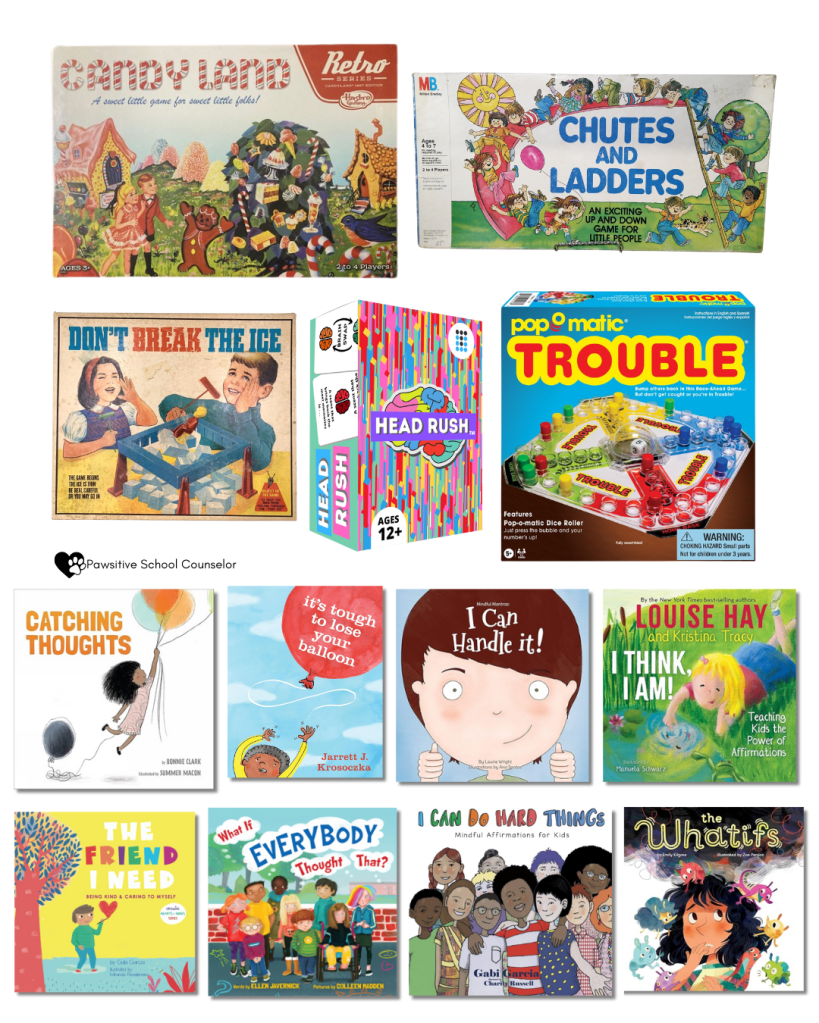
“Catching Thoughts” by Bonnie Clark– a good discussion starter for helpful thinking and navigating negative thoughts.
“I Can Do Hard Things” by Gabi Garcia– a book of affirmations. Partner with my book companion.
“What If Everybody Thought That” by Ellen Javernick– use it to talk about preconceived notions and noticing your thoughts.
“The What Ifs” by Emily Kilgore– use it to talk about anxious/worry thoughts and coping. Partner with my book companion.
“What Do You Do With An Idea” by Kobi Yamada- a fun book to talk about how one small idea can blossom and grow. Encourages confidence and creativity.
“I Can Handle It” by Laurie Wright– a book of mindful mantras.
“I Think, I Am!” by Louise Hay– use it to introduce helpful affirmations.
“It’s Tough To Lose Your Balloon” by Jarrett J. Krosoczka– a short, simple book to talk about finding the silver lining and optimism. Partner with my book companion.
“The Friend I Need” by Gabi Garcia– use it to talk about negative self-talk, self-care/self-compassion, and handling mistakes.
Planning and Problem Solving
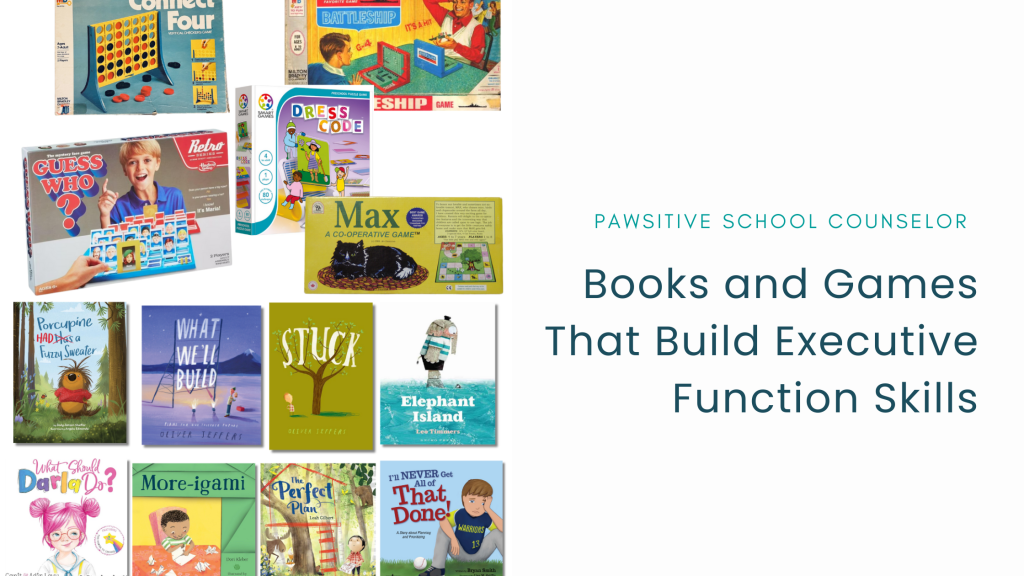
Strategy games build executive function by strengthening foresight, deduction, planning, spatial strategy, logical reasoning, and introduces probability and spatial thinking.
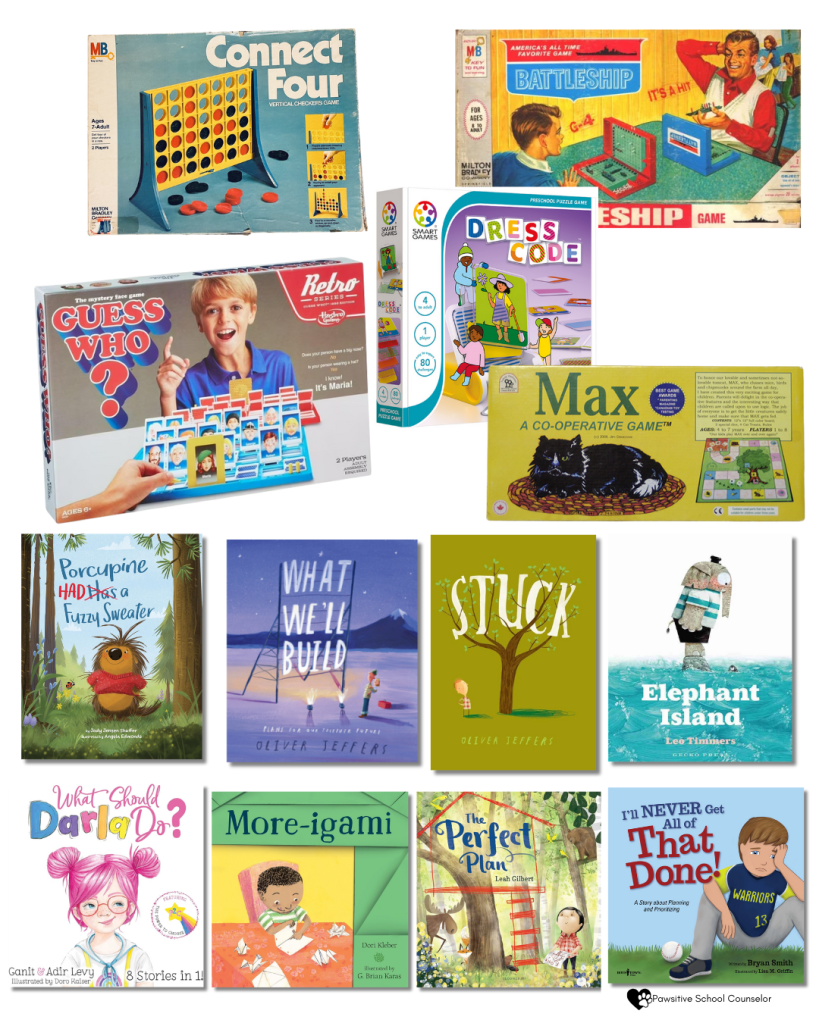
“Porcupine Had a Fuzzy Sweater” by Jody Shaffer– use it to talk about making choices, honesty, and deciding what needs to be done.
“What We’ll Build” by Oliver Jeffers– A father and daughter set about laying the foundations for their life together. Use it to talk about working together.
“Stuck” by Oliver Jeffers– A fun discussion starter on preventing and solving a problems instead of making problems bigger. Partner with my book companion.
“Elephant Island” by Leo Timmers– Caught in a storm, Arnold the elephant washes up on a tiny island. Along comes Mouse in a little dingy and Arnold who use the wreckage to make the island bigger. Good for discussions on rebuilding and perseverance, creative problem solving, and teamwork.
“What Should Darla Do” by Ganit Levy- this entire choose your own adventure series is great for helping kids think about the choices they make and the consequences of those choices.
“More-igami” by Dori Kleber– A creative young boy with a passion for practicing origami finds a surprising source of encouragement on his diverse city block. Great for talking about persistence when learning something new.
“The Perfect Plan” by Leah Gilbert– Use to talk about leadership, perseverancel and creative thinking.
“I’ll Never Get Any Of That Done!” by Bryan Smith– teaches the 3 Ps – prioritizing, planning and posting.
Flexible Thinking
Chess, UNO, and Jenga build flexible thinking by teaching players to adapt, shift strategies, and respond to change.
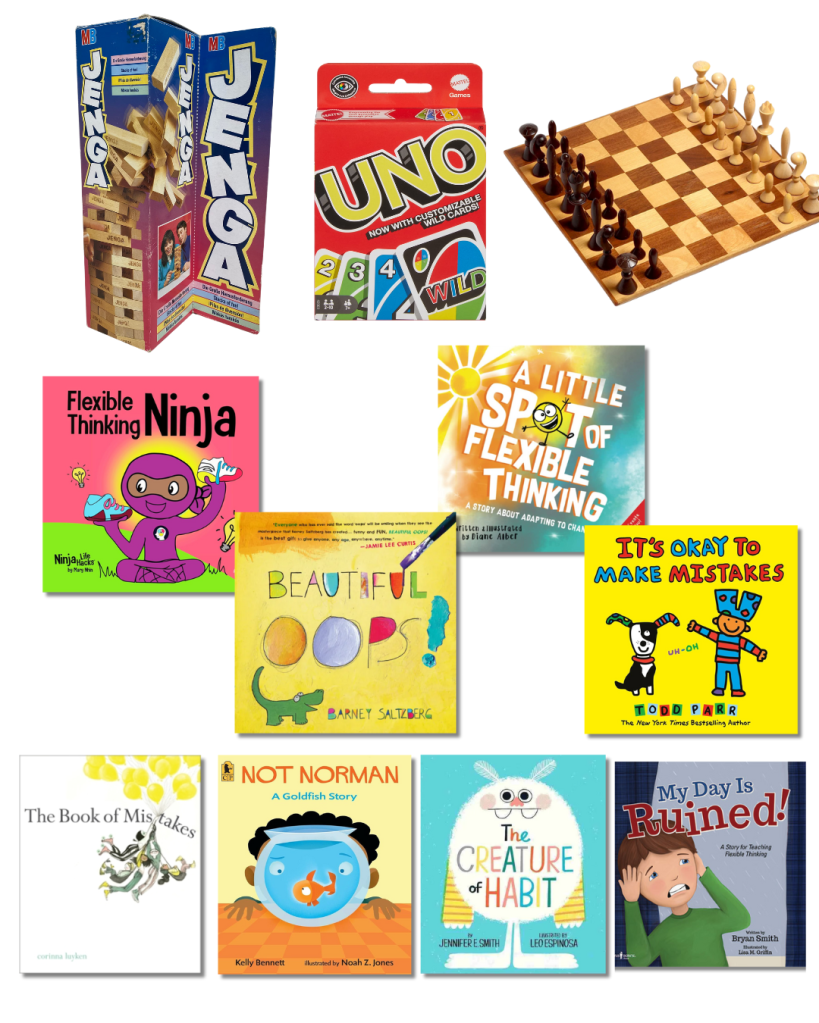
“Flexible Thinking Ninja” by Mary Nhin– use it to teach about problem solving, being creative, and looking at a problem from different angles.
“Beautiful Oops” by Barney Saltzberg– I use this for so many lessons including those on seeing a mistake as an opportunity.
“A Little Spot of Flexible Thinking” by Diane Alber– great for discussions on changes to routines and problem solving.
“It’s Okay To Make Mistakes” by Todd Parr– talk about the joy of happy accidents and how mistakes help us grow.
“The Book Of Mistakes” by Corinna Luyken– a story about the creative process, and the way in which “mistakes” can blossom into inspiration.
“Not Norman” by Kelly Bennett– when the main character doesn’t get the pet he wants, he learns to deal with disappointment. Fun for talking about finding joy in things that you weren’t expecting.
“The Creature Of Habit” by Jennifer Smith– use it to talk about adapting to a change in routine/embracing change, appreciating differences and trying new things.
“My Day Is Ruined!” by Bryan Smith– teaches kids four steps to flexible thinking.
Working Memory
Play games that stretch short-term recall and processing—like Memory, Snap, and ‘I Went to the Store’. These classic games build brain power by tracking rules, sequences, and multiple items at once.

“I Just Forgot” by Mercer Mayer– use it for discussions on being responsible and remembering the things we need to be successful.
“Don’t Forget” by Jane Godwin– use for lessons on daily routines, remembering to smile and be kind, and mindfulness.
“The Forgetful Knight” by Michelle Robinson– a fun way to talk about remembering details.
“What George Forgot” by Kathy Wolff– I love using this book to talk about morning routines that help us get to school on time and remembering our school materials.
“Memory Jars” by Vera Brosgol- A book about saving your favorite memories and keeping them close forever, perfect for transitons like the end of a small group or end of the year.
“How Can I Remember All That?” by Tracy Alloway– talks about what working memory is, problems with memory, and includdes tips for improving memory.
“How Do I Remember All That?” by Bryan Smith– includes examples of stopping and jotting, breaking down complex problems into smaller, manageable tasks, using mnemonic devices, visualization, and other practical tools for improving working memory.
Putting It All Together
Combine these books and games with this curriculum to help kids see—and practice—the full range of executive function skills.
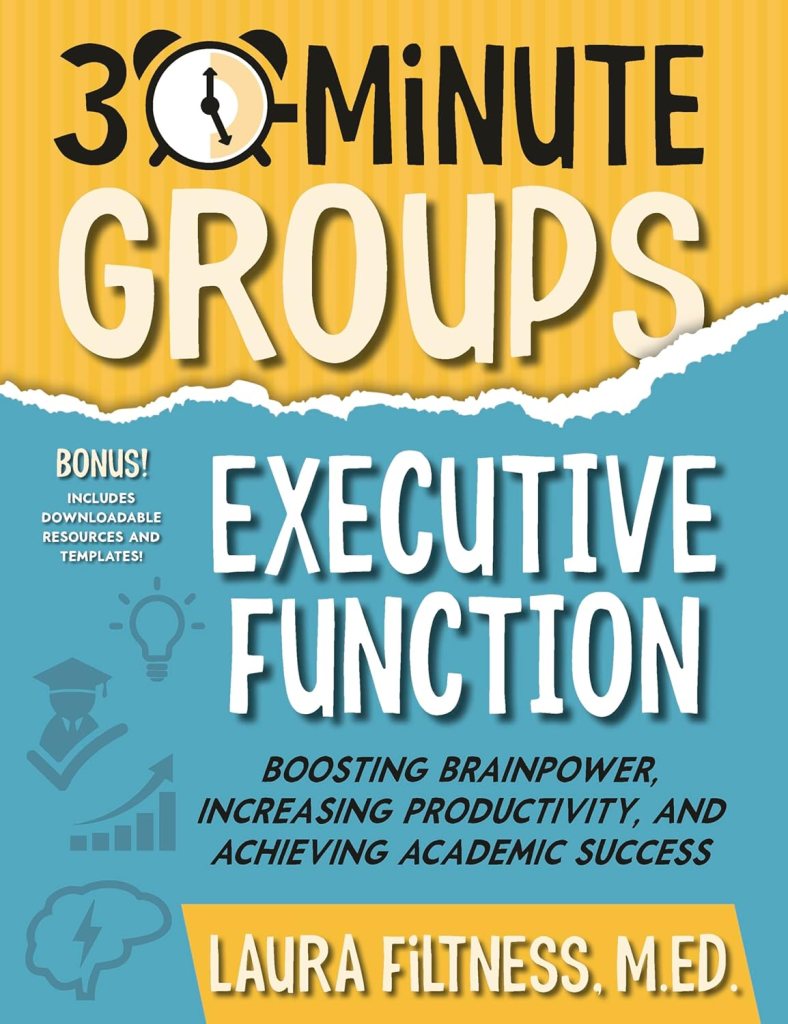
Teach planning, time management, and goal-setting in 30-minute small-group lessons for grades 2–9. This flexible, low-prep workbook builds organization, focus, and self-management skills with practical, research-informed strategies—and includes 10 complete ASCA®-aligned lessons, assessments, action plans, and ready-to-use caregiver resources.
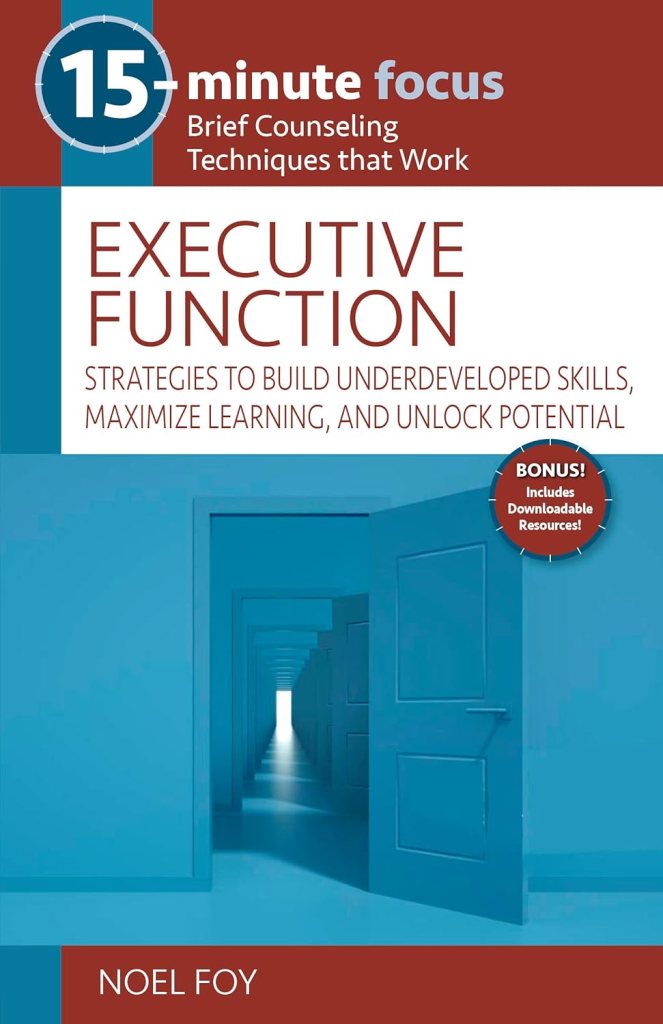
15-Minute Focus: Executive Function breaks down 12 key executive function skills and shows how they impact learning, behavior, and emotional regulation. This research-based guide offers practical, easy-to-use strategies to reduce stress, support all kinds of learners, and boost students’ organization, focus, productivity, and independence—with actionable tips and ready-to-use downloads you can implement right away.
Shop The Post

Find the books and games on my Amazon list here.

Find more books for adults and specific strategies on my Book Shop list.
Download The Book List
Pin For Later


 Pawsitive School Counselor
Leave a comment