Have you been considering having an animal become part of your school counseling program?
Having my dog Boss with me at my school was one of the best experiences of my career. I have become passionate about using animals to support our work.
With that in mind here are a few things to get you started:
Watch me to learn more
This short PD has information on different types of support animals, considerations, and tips on getting started.
Therapy Dog or School Support Dog? Choosing the Right Language
As dogs become more common in schools, you may hear terms like therapy dog, therapy animal, school dog, support dog, and animal-assisted intervention used interchangeably.
But the language we use matters—especially in schools, where most of us are not providing long-term clinical therapy with a dog as part of a formal treatment plan.
A therapy animal is generally a specially evaluated animal that works with a handler to provide comfort, connection, and support to multiple people in settings such as schools, hospitals, and other community environments. In contrast, the term school support animal has been proposed for animals working in educational settings as part of structured, goal-directed programs with educational or developmental outcomes overseen by an educator.
For many school counselors, educators, and school-based teams, this distinction may better describe what the dog actually does: helping students feel connected, increasing motivation to participate, supporting regulation and coping, encouraging reading or communication, facilitating relationship-building, or simply providing a safe and welcoming presence at school.
Research on animal-assisted interventions in schools is promising, with studies suggesting potential benefits related to stress, motivation, engagement, social-emotional functioning, and well-being, although researchers also caution that the evidence base is still developing and studies vary considerably in quality and design.
In other words, having a dog in school does not automatically make an interaction “therapy.” The role of the dog, the goals of the intervention, the professional providing the service, and the structure surrounding the interaction should determine the terminology. Calling a dog a school support dog can help communicate that the dog is an important part of a school-based support system—without implying that every interaction is clinical treatment.
It’s important to understand the different types of supports animals provide.

Why This Matters
This distinction matters because the language we use should accurately reflect what we are doing with students. When we call every dog in a school a “therapy dog,” it can unintentionally create the impression that the dog is being used to provide mental health treatment or that the school professional is providing clinical therapy. That is not what most school-based programs are designed to do.
School counselors and educators may use dogs to support connection, belonging, emotional regulation, confidence, motivation, communication, reading, transitions, or simply to help make school feel like a safer and more welcoming place. These are meaningful and intentional supports—but they are not necessarily therapy.
Using terms such as school support dog or school-based animal-assisted intervention can help us communicate the purpose of the work more accurately. It also allows us to acknowledge that the dog may play different roles throughout the school day. A student might read to the dog, practice a coping strategy while sitting beside the dog, visit the dog after a difficult morning, participate in a lesson about empathy and responsibility, or simply spend a few minutes experiencing the calming presence of an animal.
There is also an important professional boundary here. A dog does not turn a school counselor into a therapist, and an interaction with a dog does not automatically become therapy. Our role, training, credentials, the goals of the intervention, and the structure of the service all matter.
Being thoughtful about terminology isn’t about minimizing the incredible impact dogs can have in schools. Quite the opposite. It allows us to describe that impact honestly and advocate for these programs based on what they actually provide: connection, support, skill-building, engagement, and a stronger sense of belonging.
Connect with a local organization
Here are some resources to help get you started. It’s important to connect with a local organization to help provide training and support. You should also check with your local school board about requirements and regulations.

Pet Partners
“Pet Partners is the national leader in demonstrating and promoting the health and wellness benefits of animal-assisted therapy, activities, and education. With thousands of registered teams making more than 3 million visits annually, Pet Partners serves as the nation’s most diverse and respected nonprofit registering handlers of multiple species as volunteer teams. “- Pet Partners

UTK H.A.B.I.T:
“HABIT is a community group of volunteers working together to explore the circumstances and consequences of the human-animal bond and to promote this valuable bond between people and animals. HABIT is comprised of representatives from the University of Tennessee College of Veterinary Medicine, volunteers from the community, and private veterinary practitioners.”- HABIT
Learn more at: UTK H.A.B.I.T.

Alliance of Therapy Dogs
“ATD provides testing, certification, registration, support, and insurance for members who volunteer with dogs to visit hospitals, special needs centers, schools, nursing homes, and other facilities.”
A great resource for you and your dog, if you are looking to become a certified therapy team or your facility, would like to start a therapy dog program.”- ATD
Learn more here: Alliance of Therapy Dogs

Love On A Leash
“Love On A Leash® is a 501(c)(3) nonprofit organization dedicated to providing an avenue for volunteer pet therapy teams to engage in meaningful and productive animal assisted therapy.”- Love on a Leash
Learn more at:

AKC
The AKC has a list of therapy dog programs listed alphabetically and lists the states they serve.
Learn more here.

Court Appointed Special Advocate® (CASA)
CASA (Court Appointed Special Advocates) provides trained volunteers who advocate for children involved in the foster care and juvenile court system, helping ensure that their needs and best interests remain at the center of the process. For Boss and me, that meant showing up for families during foster care review board meetings and other difficult moments in the system. We were even sworn in so that, if a child was called to testify, Boss and I could sit underneath them while they spoke.
Learn more here.
Introduce yourself/the dog
Whether a volunteer is coming to visit a specific class or your dog will be with you. It’s important to remember to introduce them and explain the rules of being around the dog.

When you introduce yourself, the volunteer, and your dog to students, don’t skip the ground rules. Before students learn how to interact with the dog, they need to learn how to respect the dog. Take a few minutes to review how to greet the dog appropriately, how to approach and pet them, and what good manners look like around a working dog. Talk about respecting the dog’s body and personal space—including areas where the dog may not enjoy being touched, why students should never step over or climb on the dog, and how to recognize when the dog is asking for space.
Be clear about your school’s and your dog’s specific rules, too. Are students allowed to pet the dog while they are eating? Should they wait until the dog has been invited to interact? What happens if the dog is resting? These details may seem small, but consistent expectations help keep both students and the dog safe and comfortable.
Finally, establish the routines and procedures for having a dog in the school. Students should know what to do when it is their turn to visit, where they should wait, how many students can interact with the dog at one time, and what happens when the visit is over. Just as importantly, teach students how to transition back to learning without turning the dog’s presence into a distraction. A school support dog should be part of the school’s routines—not the reason the routines disappear.
And remember: the rules aren’t just for the students. The handler is responsible for monitoring the dog’s body language, recognizing signs of stress, fatigue, or discomfort, and giving the dog a break or removing them from the situation when needed. Research on school-based therapy dog programs emphasizes that student safety and animal welfare have to go hand in hand.
The goal isn’t simply to teach students how to pet a dog. It’s to teach them how to share space with another living being by noticing boundaries, asking permission, paying attention to body language, and respecting when someone needs space. Those are skills worth practicing with or without a dog in the room.
Click here and select “use template” for an editable Canva link.
You can also click this link for an editable PPT:
How will you use your animal? Animal Assisted Activity Ideas

There are so many ways to incorporate an animal into your school community, and it doesn’t have to look the same every day—or even involve a formal activity. Your animal can be part of individual student support, classroom experiences, small groups, school-wide events, or simply those little moments throughout the day when a student needs connection.
Here are just a few ways you might use your animal:
- Individual support: Meet with students 1:1 for connection, conversation, skill practice, or a much-needed break.
- Classroom visits: Bring the dog to a specific classroom for a planned visit or activity.
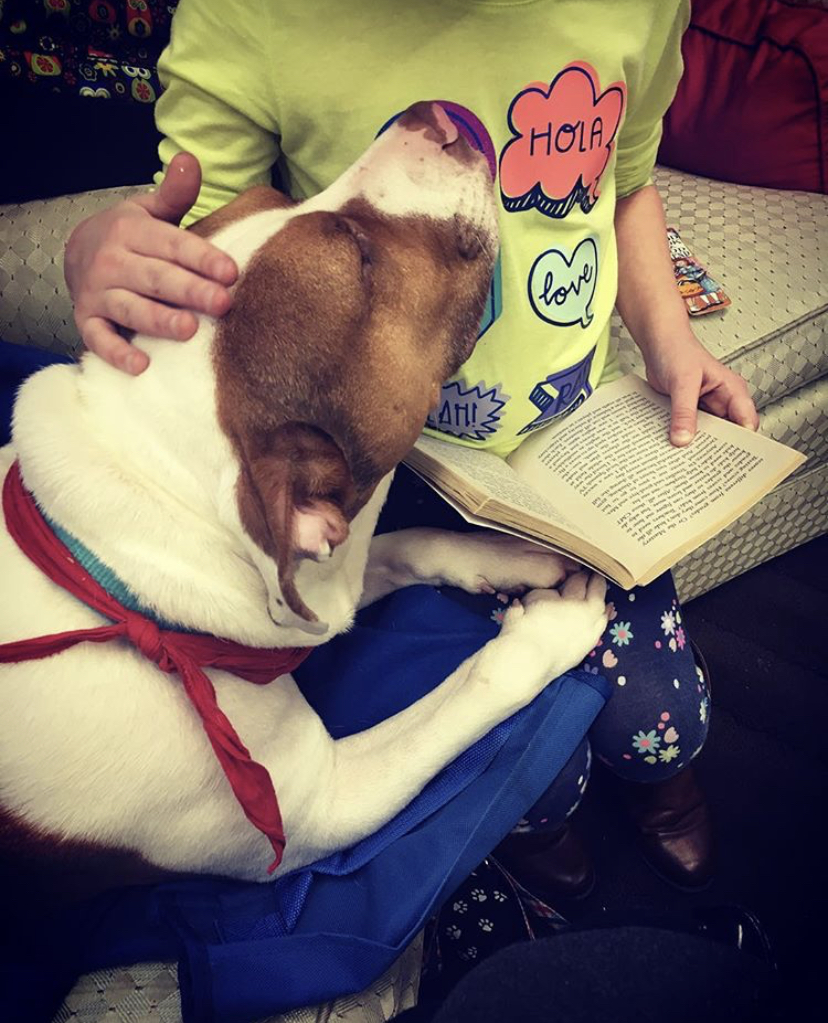
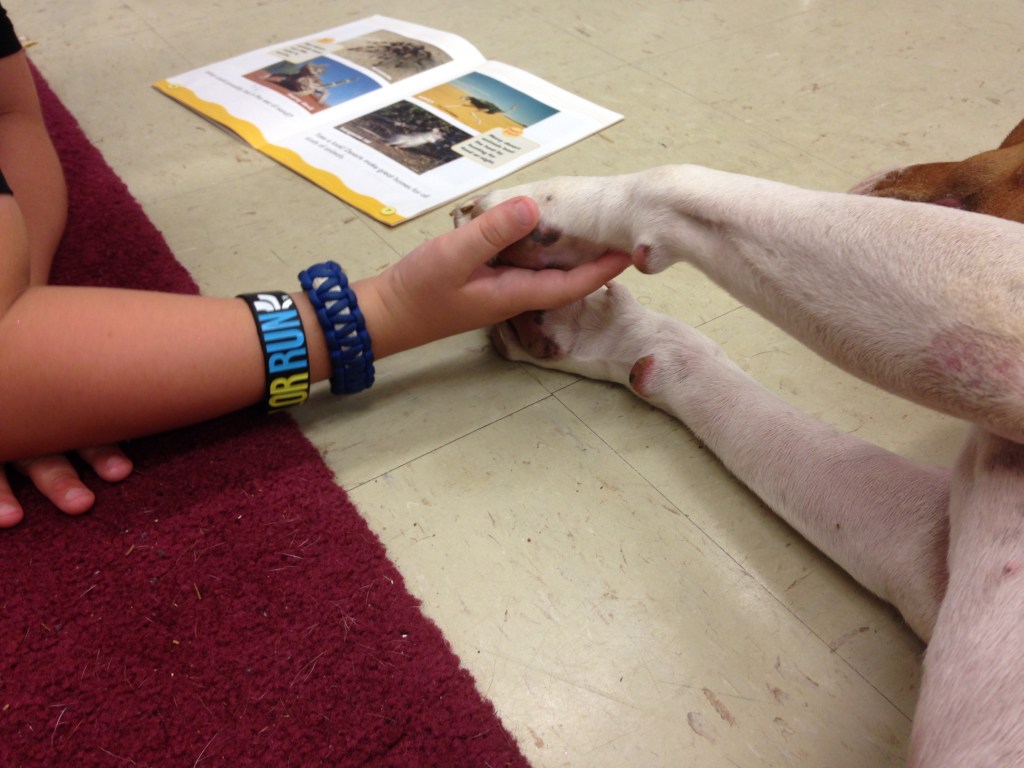
- Reading with the dog: Create a reading center where students can practice fluency, read aloud, or simply enjoy a book with the dog nearby.
- Small groups: Incorporate the dog into counseling or skill-building groups when their presence supports the purpose of the group.
- Lessons: Teach lessons about dog safety, body language, boundaries, empathy, responsibility, or caring for animals.
- Teacher wellness: Offer teachers a chance to spend a few minutes with the dog as part of a staff wellness or self-care activity.
- Dog-themed clubs: Try a “Yoga with the Dog” club or another student group that combines the animal with a shared interest.
- Special events: Include your dog in events such as Meet the Counselor, back-to-school activities, testing days, celebrations, or other school-wide events

And those are just the starting points. Some of my favorite animal-assisted activities have been the ones that happened organically.
Paw-ty Time
Turn student and class accomplishments into opportunities for connection. Ask teachers to let you know when a student or class reaches a goal, and then let the student or class choose how they want to celebrate with the dog. Maybe the dog visits their classroom, a student gets to take the dog for a supervised walk, or the class gets a few minutes of special time together.
The celebration doesn’t have to be elaborate. Sometimes the opportunity to spend time with the dog is the reward.
Pup Training
Some students absolutely love the opportunity to help “train” the dog. Of course, the handler remains in charge at all times—and should maintain control of the leash and decide which activities are appropriate—but students can help practice familiar commands such as sit, stay, or heel.
What makes this especially valuable is the conversation that can happen after the activity. What did you notice about the dog’s body language? What happened when the dog didn’t respond right away? How did you handle frustration? What helped you reach your goal? How is training a dog similar to learning a new skill yourself?
A simple activity can become a conversation about nonverbal communication, patience, frustration tolerance, goal-setting, persistence, and flexible thinking.
Sometimes, Just Being Together
And then there are the moments that don’t really need an activity at all.
Sometimes a student just wants to sit with the dog. Sometimes they want to talk while the dog lies beside them. Sometimes they want to read, play, draw, or simply have a quiet few minutes in the same space.
Throughout my career, some of the most meaningful moments with a school dog have happened when I didn’t have an activity planned. I watched students who were hesitant to talk to an adult begin opening up while they sat beside the dog. I watched students who were having a difficult day slowly settle as they played with or simply sat near the dog.
The dog didn’t solve the problem. The dog created a space where the student felt comfortable enough to begin.
That’s one of the things I love most about having an animal in a school: not every interaction has to be a lesson, intervention, or carefully planned activity. Sometimes the most powerful thing you can offer is a safe space, a little connection, and a dog who is happy to sit beside you.
Gather and share the data
The joy and connection a school support animal brings to a building can be easy to see—but don’t let the feel-good moments be the only evidence you have. If your animal is part of a specific intervention or support, think about how you can collect simple data to show whether that support is making a difference.
Your data should connect directly to what you are trying to accomplish.
- Reading: If your dog regularly works with a class or group to support reading, track the reading measure you are targeting—fluency, accuracy, confidence, or reading assessment scores.
- Attendance: If you are working 1:1 with a student who is experiencing difficulty with separation or school avoidance, look at attendance, tardies, or time spent in the classroom.
- Behavior or engagement: If the dog is part of a support designed to increase classroom engagement or decrease specific behaviors, identify a simple measure you can track before, during, and after the intervention.
- Student experience: Sometimes the outcome you want to understand is how students feel. Use brief student surveys to gather feedback about belonging, comfort, confidence, connection, or their experience with the animal.
Most importantly, share what you learn. Data can help you demonstrate the value of your program, communicate with administrators, advocate for continued support, identify what is and isn’t working, and make thoughtful decisions about how your animal is used.
Below, I’ve included a sample Google Forms survey you can use as a starting point for informal data collection and feedback. Adapt the questions to fit your animal, your goals, and your school community.
Click here to make a copy of a “Ruff Reading Dog” student survey.
Click here to make a copy of the “Ruff Reading Dog” teacher survey.
Share Your Stories 🐾
I want to see your animals in action! If you’re using a school support animal to build connection, foster empathy, support students, or simply make your school a little more welcoming, I’d love to hear about it.
Tag @pawsitiveschoolcounselor in your photos and posts, or email your favorite pictures, stories, and experiences to pawsitiveschoolcounselor@gmail.com.
And please don’t just send me the polished moments! Tell me about the unexpected ones, too. The student who finally opened up while sitting beside the dog. The child who found the courage to read aloud. The class that learned to respect the dog’s boundaries. The moment that made you think, this is why we do this.
I’m collecting stories, ideas, and experiences from educators who are using animals in schools, and your story might help inspire other educators—or even become part of a future book about the incredible ways animals support students in schools. 🐾
So tag me, email me, and send me your Ruff stories!
Save the Resources
Pin For Later


Leave a Reply