Creating safe, trusting relationships in classrooms doesn’t happen by accident. Restorative conversations and community circles are intentional practices that help build belonging, student ownership, and community problem‑solving. Below are resources you can plug in immediately.
- What are Community Circles / Restorative Conversations?
Structured group time (where students can face each other in a circle) in which they share, listen, reflect, and/or problem-solve together under agreed norms. These are used proactively (for community building) or responsively (after harm, conflict, misunderstandings).

- Why use them?
- Build safety & trust
- Strengthen connections among students and with adults
- Give students ownership and voice
- Provide space for group problem‑solving & repairing harm
Types of Circles & When to Use Them
| Type | What & When | Key Features / Notes |
|---|---|---|
| Proactive Circles | Use regularly (weekly, daily) to build relationships, set norms, check in. Before conflict. | Less emotionally heavy. Good for building trust, expectation setting. Helps prevent later harm. |
| Responsive Circles | After an incident, conflict, harm. To repair relationships, understand perspectives, restore trust. | More emotionally involved. Requires norms and structure. Everyone harmed or involved gets voice. |
| Sequential Circle | Uses a talking piece to help students take turns sharing. Only the person holding the talking piece shares. Students can choose to “pass” or not share. | Helps students become more comfortable over time and promotes including all. Allows for a structured conversation and helps build community. |
| Non‑Sequential Circle | A group discussion format where participants speak and pass a talking piece freely, rather than in a fixed order. | Flexible, helps students practice active listening and a free flowing conversation style. Use for community building and problem solving. |
| Fishbowl Circle | Inner/outer circle format: inner discusses, outer observes; then swap. Good for modeling or reflecting on how discussion happens. | Useful for demonstration, teaching norms, reflecting on how we communicate. Can reduce pressure on some students. |

Sample Circles & Prompts
Here are sample prompts and ideas to use in different circle types:
Getting to Know You / Proactive
🌟 What’s one small thing that made you smile this week?
🐾 If you could have any animal (real or imaginary) as a class pet, what would it be and why?
🍕 If your favorite food could talk, what would it say to you?
🚀 Would you rather explore the deepest part of the ocean or the farthest part of space?
🎶 What’s a song, sound, or noise that always makes you feel happy?

✨ Pineapple Popcorn: A Movement + Connection Game for Community Circles
Another way I like to add movement and connection to open-ended community circles is with a game I call “Pineapple Popcorn.”
Here’s how it works:
- Students sit in a circle and pass a talking piece (I use a toy pineapple—hence the name 🍍).
- When a student is holding the pineapple, they share something about themselves or answer an icebreaker question I’ve already provided.
- While they share, the rest of the circle listens closely. If another student feels a connection—maybe they’ve had the same experience, share the same favorite food, or relate in some way—they don’t shout out “me too!” Instead, they quietly “pop” up like popcorn by standing for a moment before sitting back down. 🌽
This simple twist turns listening into an active experience and builds a visual display of solidarity in the group.
Afterward, we debrief together:
- How did it feel to see other students “pop” in connection with you?
- Were you surprised by any of the connections you noticed?
- How can you carry these connections forward in our classroom community?
“Pineapple Popcorn” adds a layer of fun while keeping the circle respectful and focused. It’s also a low-risk way for students to see that they’re not alone, and that even small details can create meaningful bonds.

Restorative / After Conflict Prompts
- What happened?
- What were you feeling? / How did that make you feel?
- What was your brain saying? What were you thinking?
- What was the hardest part?
- Who else do you think was affected by what happened?
- What do you think you need to do to make this better?
I highly recommend the restorative resources from The Responsive Counselor.
Closure / Circle Endings
- One word to describe how you feel now.
- Something you appreciate about someone else in the circle.
Resource Links & Printables
Here are tools, templates, guides you can download and implement immediately or adapt to your class.
| Resource | What It Offers | Where to Find It |
|---|---|---|
| Responsive Classroom Printable Resources | Many printables: planning guides, graphic organizers, checklists, reflection templates, etc. Helps with routines, morning meetings, establishing rules, etc. Responsive Classroom | ResponsiveClassroom.org → Printable Resources Responsive Classroom |
| CASEL: Community‑Building Circles Tool | Includes planning considerations, set‑up checklist, a recommended process for circles, and sample circle scripts for middle/high school classrooms. Casel Schoolguide | CASEL Schoolguide: A Supportive Classroom Environment: Community Building Casel Schoolguide |
| Edutopia: Using Circle Practice | Examples of prompts; how to run circles for different purposes (academic, emotional check‑in, restorative). Also sample closure activities. Edutopia | Edutopia article “Using Circle Practice in the Classroom” Edutopia |
| Edutopia: Restorative Justice Circles for Elementary | More specific examples in elementary settings: norms, what questions to ask, how to scaffold trust in young students. Edutopia | Edutopia – “Restorative Justice Circles in the Elementary Classroom” Edutopia |
| “Responsive Circles: A Guide to Resolving Student Conflict and Building School Community” (JR Entsminger) | Book + free reproducibles (scripts for different levels, reflection tools, agreements, etc.) which help with responsive circles and repairing harm. Solution Tree+1 | Solution Tree resources Solution Tree |
Conflict Mediation and Restorative Conferences
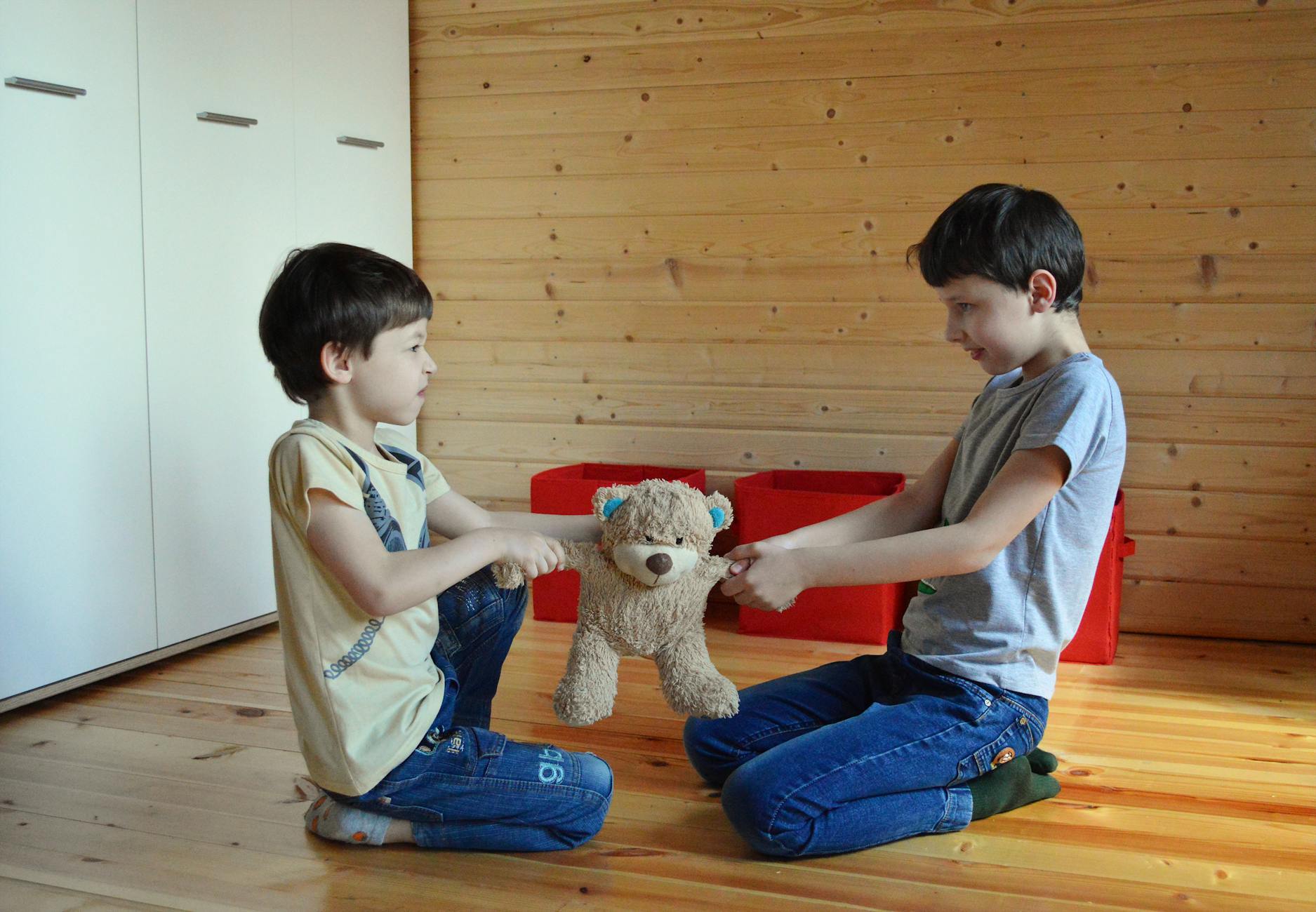
When students experience conflict, it’s important to view it not just as a problem to solve but as an opportunity to learn and grow. Conflict mediation and restorative conferences give students a safe space to share their perspectives, listen to one another, and work toward repairing harm.
These practices emphasize accountability and empathy over punishment, helping students take responsibility for their actions while also understanding how those actions impact others.
By slowing down, guiding respectful dialogue, and supporting students as they brainstorm solutions, we empower them with lifelong skills in communication, problem-solving, and relationship building.
While school counselors often help lead conflict mediation and restorative conferences, they don’t need to be the only ones facilitating. Teachers, administrators, and even trained student leaders can guide these conversations when provided with clear structures and support. Sharing the responsibility not only lightens the counselor’s load but also builds a stronger, school-wide culture where everyone feels empowered to address conflict in a restorative way.
Sample Script Educators To Help Facilitate A Restorative Conversation
STEP 1: Set Intention & Safety
- Teacher: “We’re going to talk about what happened and how we can make things better. This isn’t about blame—it’s about listening, understanding, and restoring respect.”
- Teacher: “We’ll use some sentence starters to help guide us. I’m here to support, not to judge.”
STEP 2: Share Perspectives
- Student A: “I felt ___ when ___.” / “It made me feel ___ because ___.”
- Student B listens. Then: “I hear that you felt ___.” / “I understand that ___ made you feel ___.” / “I didn’t mean to ___, but I see how it hurt you.”
- Swap roles.
STEP 3: Reflect on Needs & Impact
- Teacher: “What did you need in that moment that you didn’t get?”
- Ask: “How did this affect you and others?”
STEP 4: Problem Solve & Commit
- “What can we do now, together, to make things better and avoid this happening again?”
- Use sentence starters like: “Next time, I will ___.” / “I can try to ___ when I feel ___.” / “I will take responsibility by ___.”
STEP 5: Agreement & Follow‑Up
- “What do you agree to do going forward?” Write it or say it aloud.
- Optionally: “Would you like to check in later this week to see how it’s going?”
STEP 6: Closure / Appreciation
- Something positive: “I appreciate ___ about ____.” / “Thank you for listening.”
- Optional: share a high‑point, one word reflection, etc.
👉 Want a starting point? Download my free sample script for student mediation to see the exact prompts and questions I use when guiding a restorative conversation.
How to Embed These Practices & Make Them Work
- Establish Norms Early: Make sure students know how circles work (one person speaks at a time, listening, respecting what is shared). Consistency helps.
- Use Talking Pieces or something symbolic to indicate whose turn it is to speak. Helps with structure.
- Regular Schedule: Proactive circles work best if they are part of a regular routine (morning, weekly, etc.). A regular schedule builds trust and makes responsive circles easier when conflicts arise.
- Teacher/Facilitator Preparation: Reflect on your own biases, responses; prepare questions; plan how to intervene if someone breaks norms.
- Follow‑up: Check‑ins after agreements to see how it’s going. Repair when necessary. It’s not enough just to have the conversation once.
Pin For Later


 Pawsitive School Counselor
Leave a comment