
🧠🌿 Mental Health Awareness Month: Ideas to Support Kids & Staff 🌿🧠
May is Mental Health Awareness Month, making it the perfect time to open up conversations about self-care, emotional well-being, and mental health with students and staff. Even small efforts can make a big impact when it comes to fostering a positive and supportive school environment. Here are some simple, meaningful ways to celebrate and promote mental wellness all month long:
📚 Read-Alouds that Inspire Mental Wellness

Books are a powerful, age-appropriate way to help children explore their feelings, normalize emotional challenges, and learn healthy ways to cope. Reading stories that reflect real struggles—and how to work through them—can be incredibly impactful during Mental Health Awareness Month and beyond.
Here are some favorite titles to consider:
- 📖 Ruby Finds a Worry by Tom Percival
A wonderful story that teaches kids the importance of recognizing and talking about their worries before they grow. - 📖 The Good Egg by Jory John
A funny, thoughtful story about perfectionism, pressure, and learning to let go and take care of yourself. - 📖 The Struggle Bus by Julie Koon
Perfect for children who’ve had a hard day (or week), this book reminds readers that it’s okay to struggle and that support is always near. - 📖 Pocket Full of Sads by Brad Davidson
A gentle and relatable book about carrying sadness and the power of connection and empathy in hard times. - 📖 The Big Squeeze by Molly Harris
A beautifully illustrated book that helps kids understand the overwhelming feeling of pressure, whether it’s from expectations, stress, or trying to fit in—and how to release it with mindfulness and self-compassion. - 📖 A Little Spot of Emotion series by Diane Alber
This engaging series introduces a range of emotions and includes kid-friendly strategies for recognizing and managing big feelings.
Find more books by visiting my big book database.
Find companion Activities here:
Ways to incorporate these into your school activities:
- 📺 Morning News Read-Alouds – Feature a “Book of the Week” and read it aloud or highlight key takeaways.
- 📚 Library Collaboration – Create a special display with mental health-themed titles or co-teach a lesson with your librarian.
- 🧑🏫 Classroom Visits – Set up a read-aloud schedule where counselors or staff visit to read a book.
- 📦 Teacher Lending Library – Stock a small collection of mental health books in your lounge or office that teachers can borrow for classroom use.

📢 Morning Announcements

Use your school’s morning news or announcements to set a positive tone for the day.
- Daily Mental Health Facts – Share age-appropriate facts about the brain, stress, emotions, or coping strategies.
- Mindful Moments – Lead a 1–2 minute breathing exercise, body scan, or gratitude prompt that the entire school can try together.
- Kindness Challenges – Start each day with a quick kindness challenge like “Smile at three people today” or “Write a thank-you note.”
🧩 Class Meeting Activities
Empower teachers with quick, easy prompts and activities they can use during morning meetings or circle time.
- Feelings Check-In – A simple “How are you feeling today and why?” round-robin or use a website or app to get kids talking.
- “What’s in Your Toolbox?” – Have students share strategies they use when feeling upset, overwhelmed, or anxious.
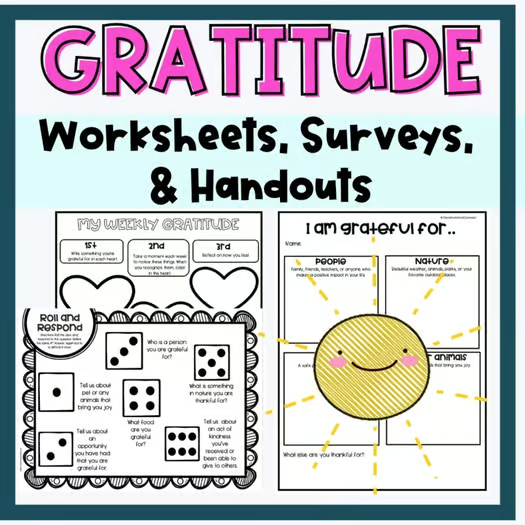
- Gratitude Circles – Each student shares one thing they’re thankful for, helping to boost mood and build empathy.
Consider creating a weekly handout or digital toolkit with 3–5 ideas teachers can pick from each week or use my ready to go ideas:
📘 Mini or Bonus Lessons
Offer to visit classrooms or encourage teachers to schedule time for special self-care or social-emotional learning (SEL) lessons. Focus on themes like:
- Understanding Emotions – Teach kids how to name and navigate big feelings.
- The Brain & Stress – Introduce simple concepts about how the brain reacts to stress and how to calm down.
- Mindfulness & Breathing – Practice simple strategies like square breathing, tracing your hand, or listening to calming sounds.
- Self-Care & Healthy Habits – Talk about sleep, movement, connection, and downtime.
- Growth Mindset & Resilience – Explore how mistakes help us grow and why it’s okay to ask for help.
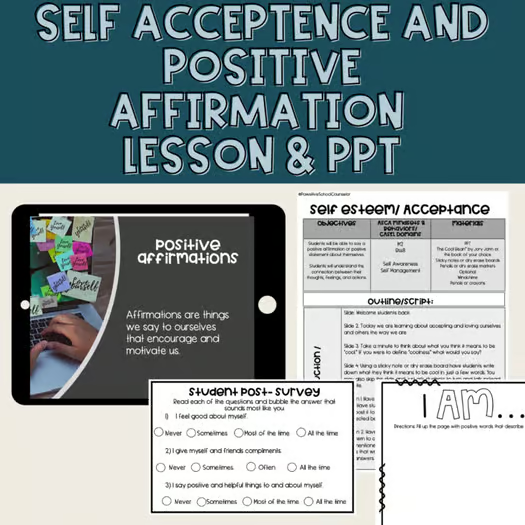
Looking for a lesson? Here are some ideas:
🛠 Planning Your Own Activities?
Here are some helpful resources to get started:
- National Alliance on Mental Illness (NAMI) Educator Tools
- Mindful Schools – Mindfulness resources and guided practices
- Centervention SEL Activities – Free printables and lessons for elementary
- The Trevor Project (for older students) – LGBTQ+ mental health support
- Teaching Tolerance: Social Justice & Mental Health
🌿 Supporting School Staff: Wellness Matters for Adults Too
Mental Health Awareness Month isn’t just for students—our educators and staff need just as much care and attention.
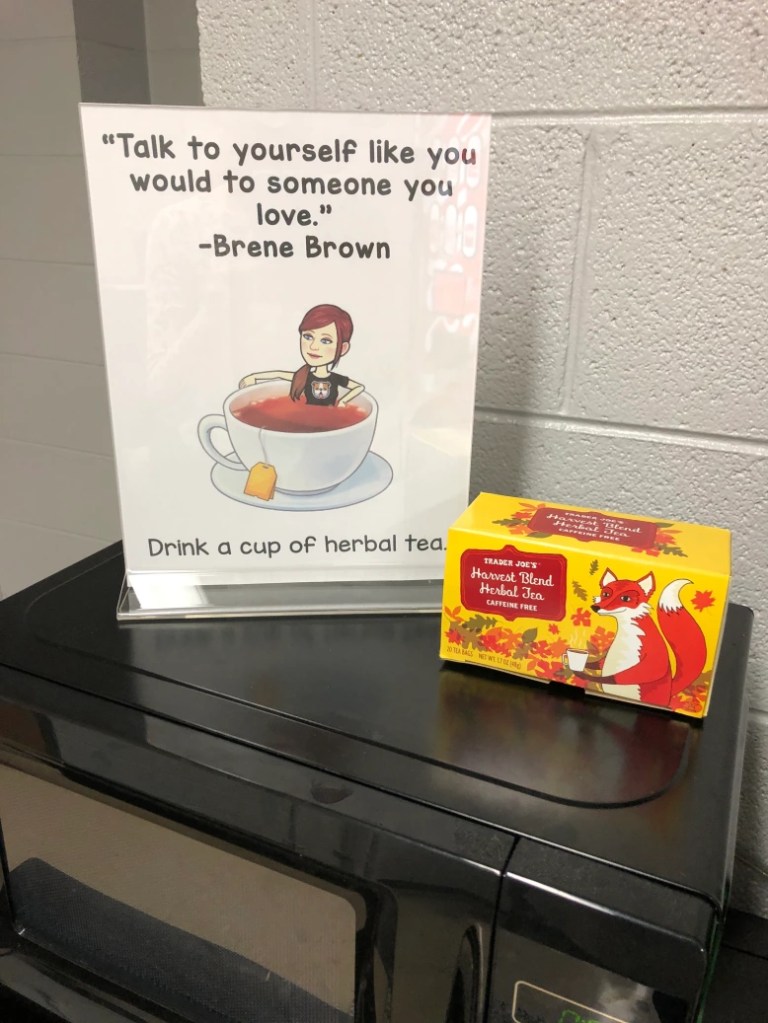
Consider adding activities throughout the month (or year!) that promote staff wellness and connection:
- 🧘 Wellness Wednesday – Host weekly wellness events like chair massages, yoga classes, or guided meditation. Reach out to local massage therapists, fitness instructors, or wellness centers to volunteer or offer discounted services.
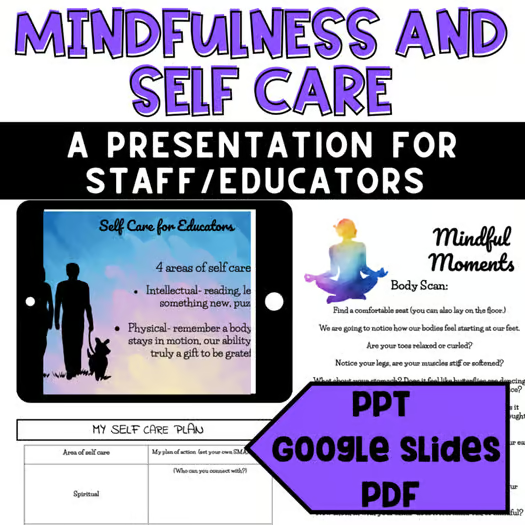
- 🧠 Mindfulness & Self-Care PD – Dedicate a staff meeting or professional development session to self-care strategies. Include breathing techniques, mindfulness tools, or stress management resources they can use personally and in the classroom.
- 🌳 Plan in Nature – Encourage teachers to take their planning time or lunch breaks outdoors. Provide blankets or camp chairs and designate peaceful outdoor areas around the school for fresh air and reflection.
- 📅 Flexible Fridays – Offer mini perks like early leave passes, dress-down days, or a “no meeting” policy one afternoon a week to ease the workload.
- ☕ Self-Care Stations – Set up a cozy space in the staff lounge with tea, stress balls, calming music, affirmation cards, or a “Take What You Need” board.
- 💚 Staff Gratitude Wall – Create a shared space where staff can write kind notes to one another to recognize the little things that make a big difference.
Taking care of our staff is just as important as supporting our students—because when educators are well, students thrive.
You can find some mindfulness activities here.

💡 Final Thought
Mental health matters every day, but May gives us a dedicated time to lead with empathy and model care for both ourselves and others. Start small, be consistent, and remember—your influence as an educator or school leader can create a ripple effect that lasts long after the month ends.
Pin For Later

Shop The Post



 Pawsitive School Counselor
Leave a comment