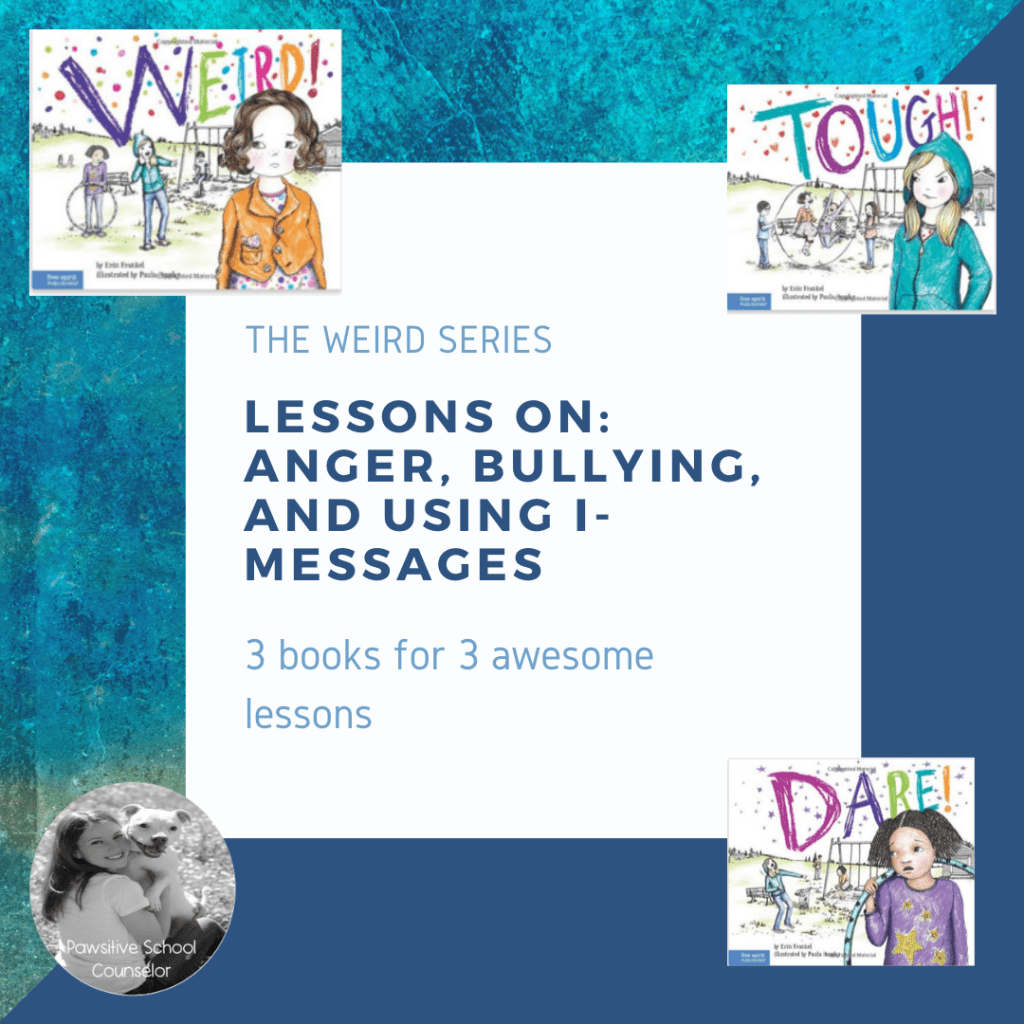
Looking for a picture book series to use for bullying prevention, anger management, and perspective-taking in your elementary school counseling lessons? The Weird Series provides a unique opportunity to explore these topics through three different points of view.
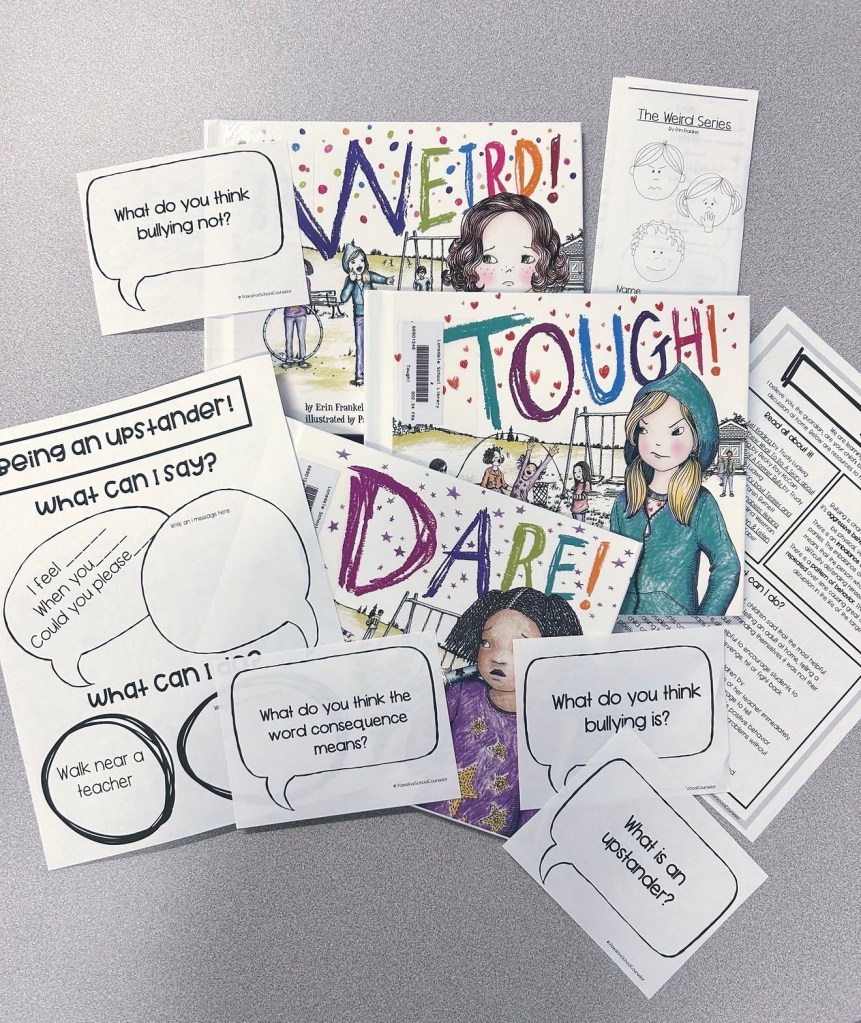
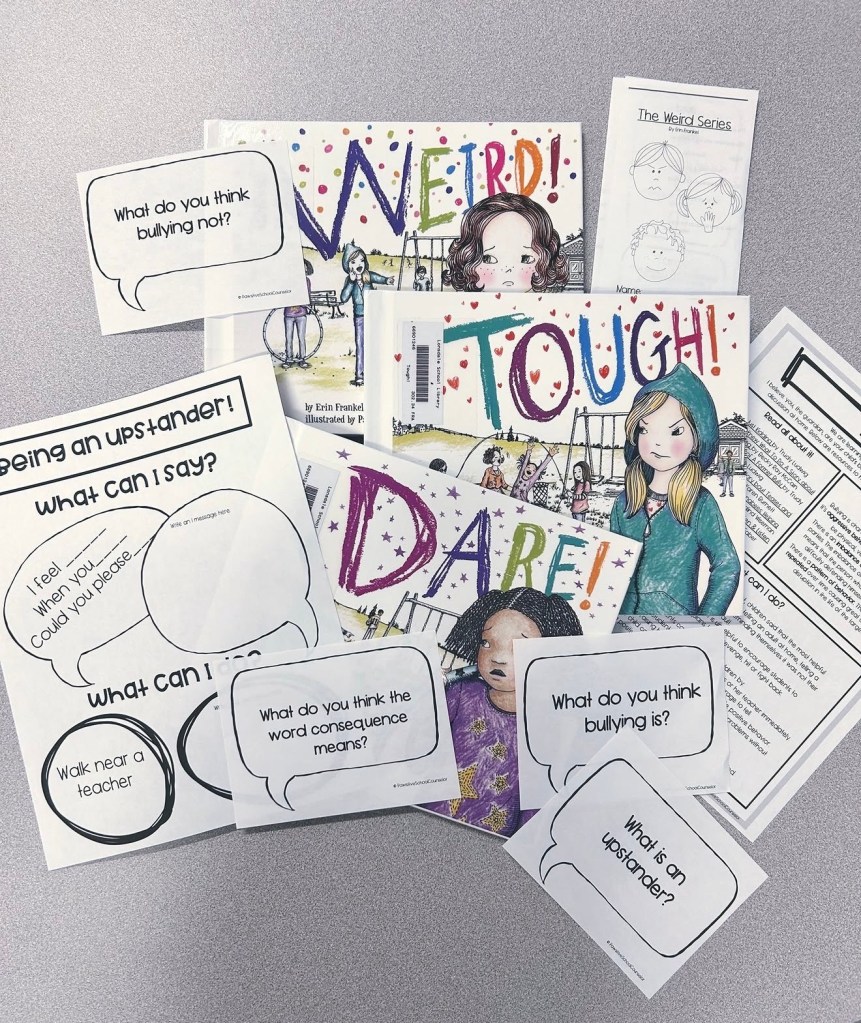
One of my favorite things about using picture books in school counseling is that they give us a way to talk about big feelings and difficult situations without putting students on the spot.
Instead of asking a student to tell us about a personal experience with bullying, friendship conflict, anger, or exclusion, we can start with a character in a book.
“What do you think this character is feeling?”
“What could they do next?”
“How might another character see this situation differently?”
Those questions can open the door to meaningful conversations about skills students can use in their own lives.
The Weird Series is especially useful because the three books allow students to explore a similar situation from different perspectives. I use the series across three elementary school counseling lessons to explore:
- Point of view and perspective-taking
- Empathy
- Assertive communication
- I-messages
- Bullying behavior
- Anger cues and triggers
- Healthy coping strategies
- Problem-solving
- Knowing when and how to seek help
Rather than trying to cover all of these skills in one lesson, I like to spread the books across three counseling lessons.
Lesson 1: Exploring Point of View
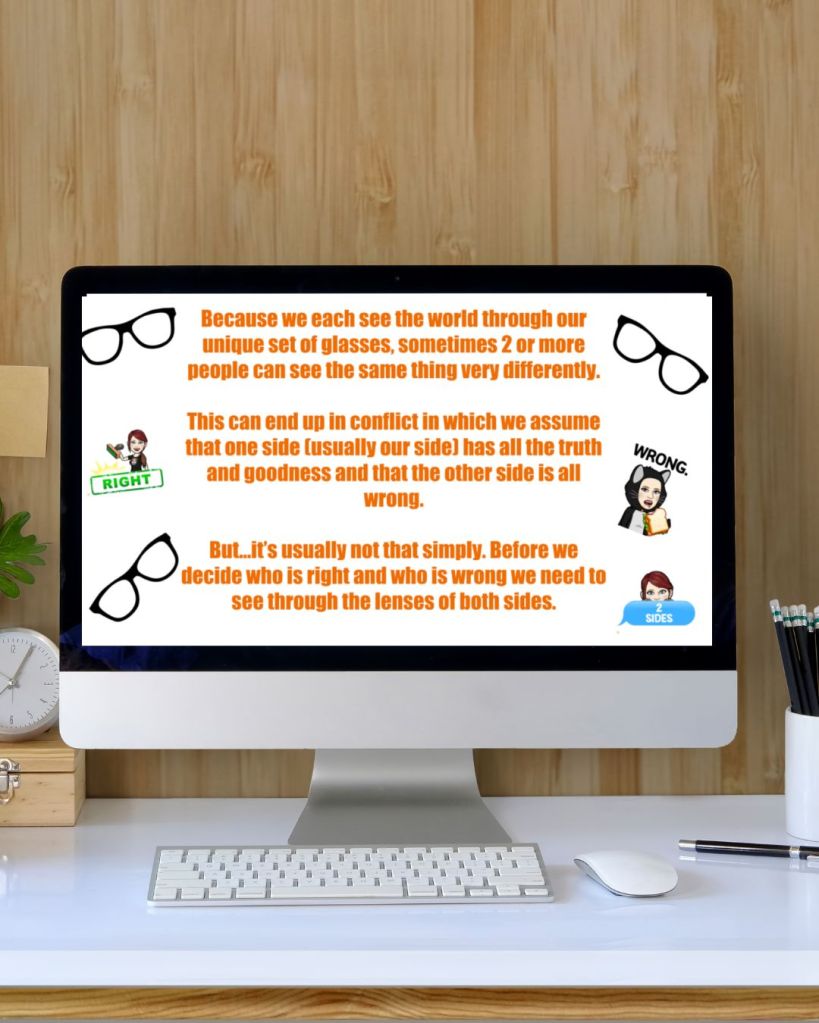
Before introducing the books, I like to get students thinking about how two people can experience the same situation and see it very differently.
Afterward, we talk about what happened:
- Did everyone see the same thing?
- Could two people both be telling the truth about what they saw?
- Why might people interpret the same situation differently?
- How can our experiences, feelings, and beliefs influence what we notice?
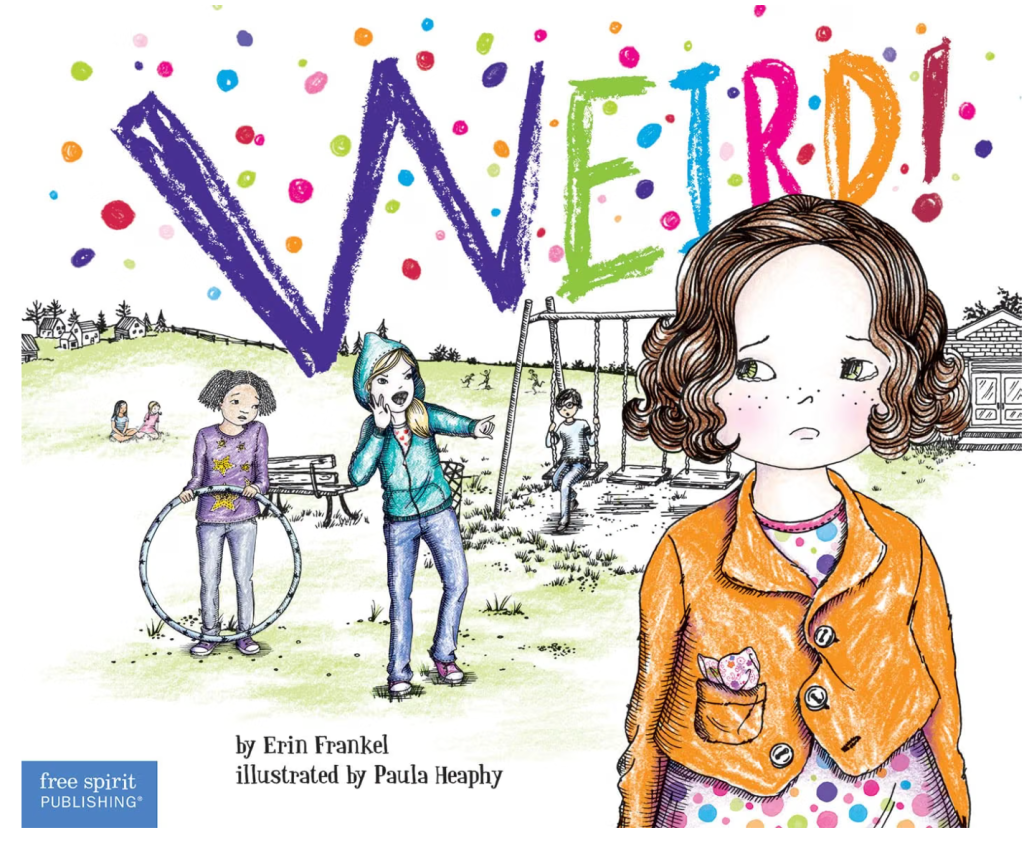
Then I introduce the three books.
I show students the covers and invite them to make observations and predictions. We read the descriptions on the back and talk about how each book gives us a different perspective on the situation.
This is a great opportunity to introduce or review the term point of view.
I get students excited about point of view with a Flocabulary and then we looked at some optical illusions to share what we saw. Next, we talked about how we each see the world differently.
As we read the first book, I stop periodically to ask questions such as:
- What do you think this character is thinking right now?
- How do you think they are feeling?
- What clues in the story make you think that?
- How might another character describe what just happened?
- What might we understand differently if we heard the story from someone else’s perspective?
Here are a more few discussion points as you read:
- I notice Luisa has written several negative things about herself on the posters itlooks like she is writing down what she is thinking. How do you think she is feeling with thoughts like this?
- As she continues to get called weird what do you notice about Luisa? (She is changing how she acts, her self esteem is dropping, and she is losing her color and confidence.)
- Luisa says she doesn’t know any words, but that’s not true. What do you think she could say? Have students write it down on a post it note and then turn into you.
- Go through them as a class and discuss each answer- would it make the situation better, worse, or the same?
After reading, students can complete a simple point-of-view activity and make a personal connection to the character.
A School Counseling Connection
This lesson is about more than identifying a narrator. It gives students practice with a skill they need every day: perspective-taking.
When students are upset with a friend, it can be very easy to assume, “They did that on purpose” or “They don’t like me.”
Helping children recognize that there may be information they don’t have—and that another person may see the situation differently—can help slow down those assumptions.
That’s an important school counseling skill because perspective-taking can support empathy, friendship skills, and conflict resolution.
After reading, students can complete a simple point-of-view activity and make a personal connection to the character.
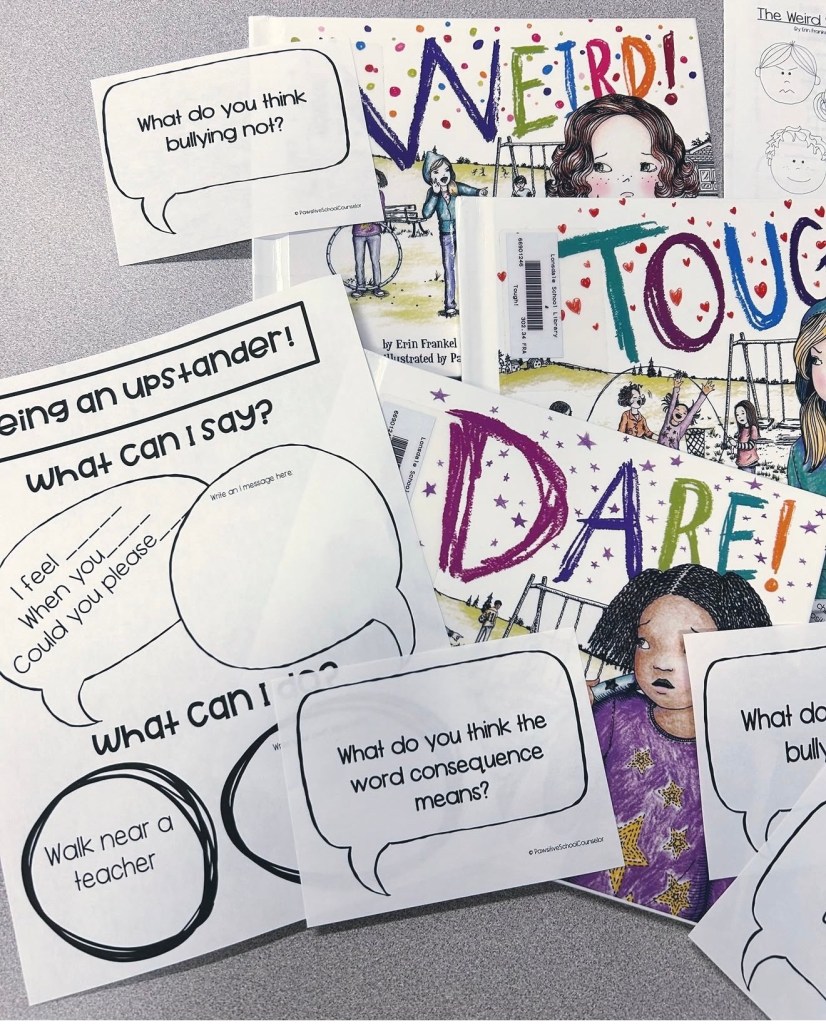
I created an activity packet to go along with The Weird Series, including differentiated activities that can be used with different grade levels.
Get my The Weird Series Activity Packet here.
Finding Your Voice with I-Messages
For the second lesson, we review what we learned about our first character and then continue with the next perspective.
There is a particularly useful moment when Louisa feels as though she has no words.
I use this moment as an opportunity to talk about what it means to find your voice and communicate assertively.
We pause the story and ask:
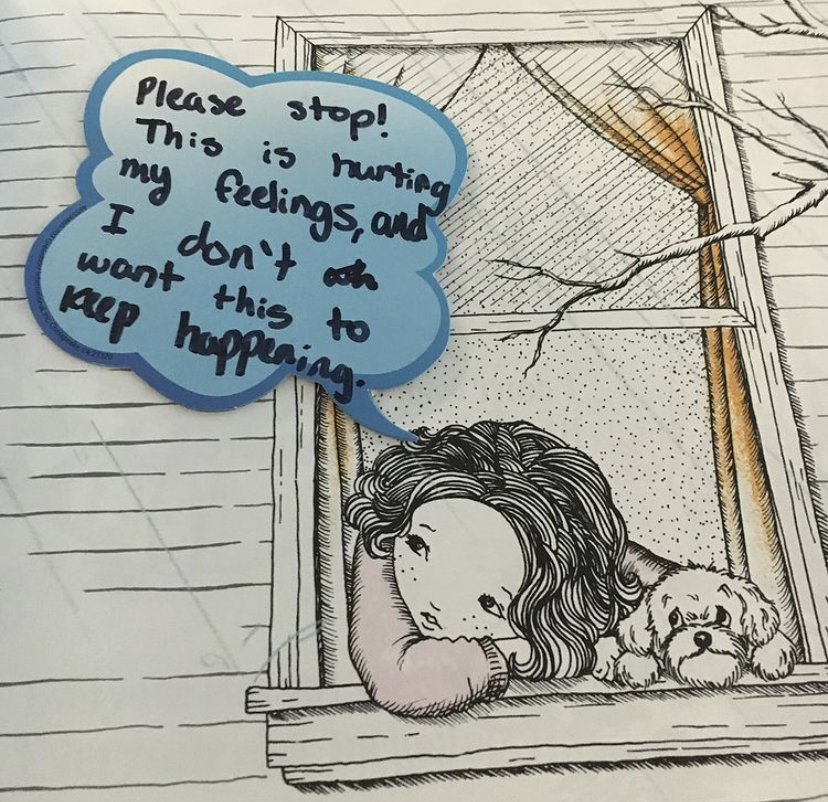
“If Louisa could find the words she needs right now, what could she say?”
Students can write their ideas on a speech bubble, sticky note, or paper speech bubble. You can easily differentiate this activity depending on the age and needs of your students.

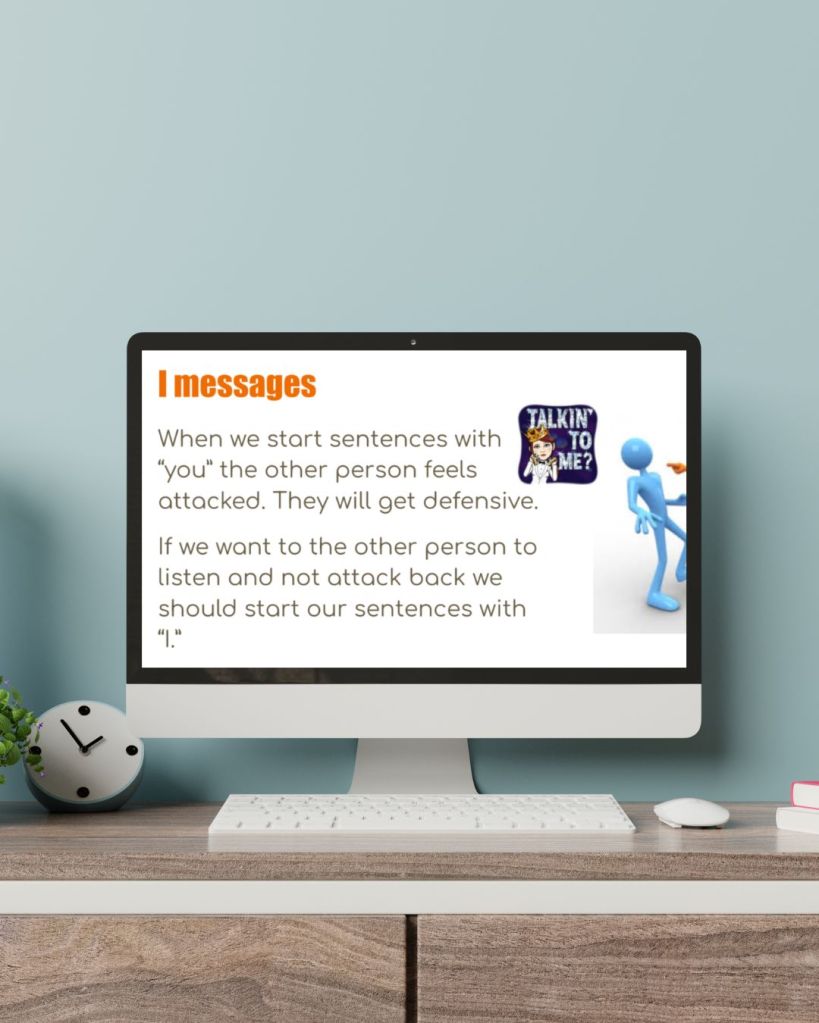
Then we introduce I-messages as one way to communicate assertively.
For example:
“I feel ___ when ___ because ___. I would like ___.”
The goal isn’t to give students a magic sentence that will solve every conflict. Instead, we’re giving them a tool for expressing their feelings and needs without attacking or blaming another person.
This is also a great place to discuss the difference between passive, aggressive, and assertive communication.
We can ask:
- What could the character say that might make the situation worse?
- What could they say that might help?
- What would an aggressive response sound like?
- What would an assertive response sound like?
- Is there a difference between standing up for yourself and being mean?
If time allows, students can practice turning an aggressive or passive statement into an assertive one.
Connect it to students’ lives
After reading, I like to use a Venn diagram to help students make a connections between the two characters we’ve already met, a character from the series and a character from another series, show, movie, etc.
Students can also compare themselves with the character.
The goal isn’t to ask students to disclose personal experiences with bullying. Instead, we can keep the conversation focused on skills and choices:
“What could someone do if they found themselves in a situation like this?”
I also love Venn diagrams, because it helps us think about making connections- that we are all more alike than we think and finding common ground is a foundation of fostering empathy.
You can find Venn diagram activities and other resources in the Weird Series Activity Packet.

Lesson 3: Exploring Anger and the “Tough” Response
For our final lesson, we explore anger and emotional regulation.
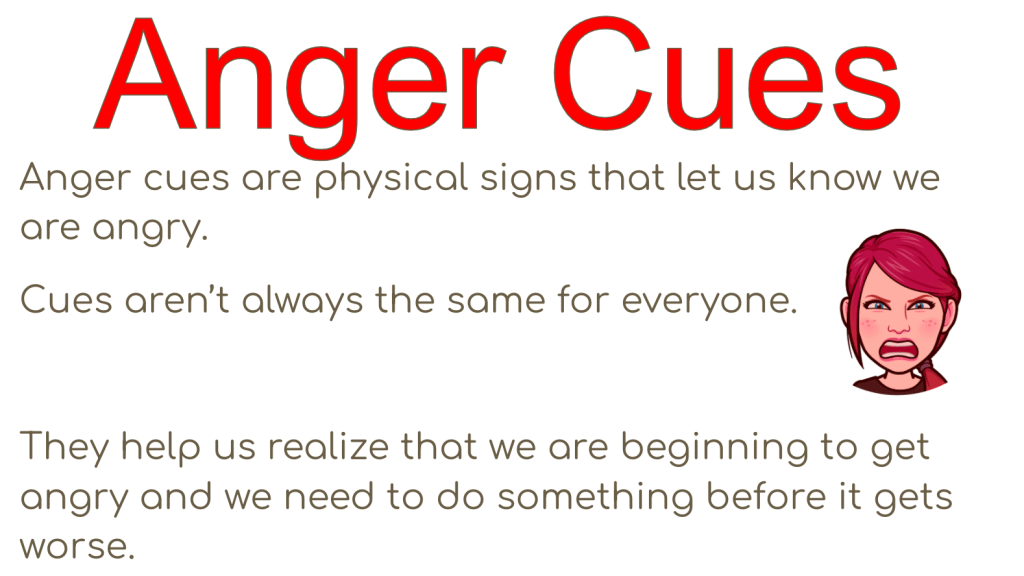
We begin by talking about anger cues and triggers.
I remind students that anger looks and feels different for everyone. Some people feel their heart beating faster. Others clench their fists, get hot, raise their voices, shut down, or feel like they need to get away.
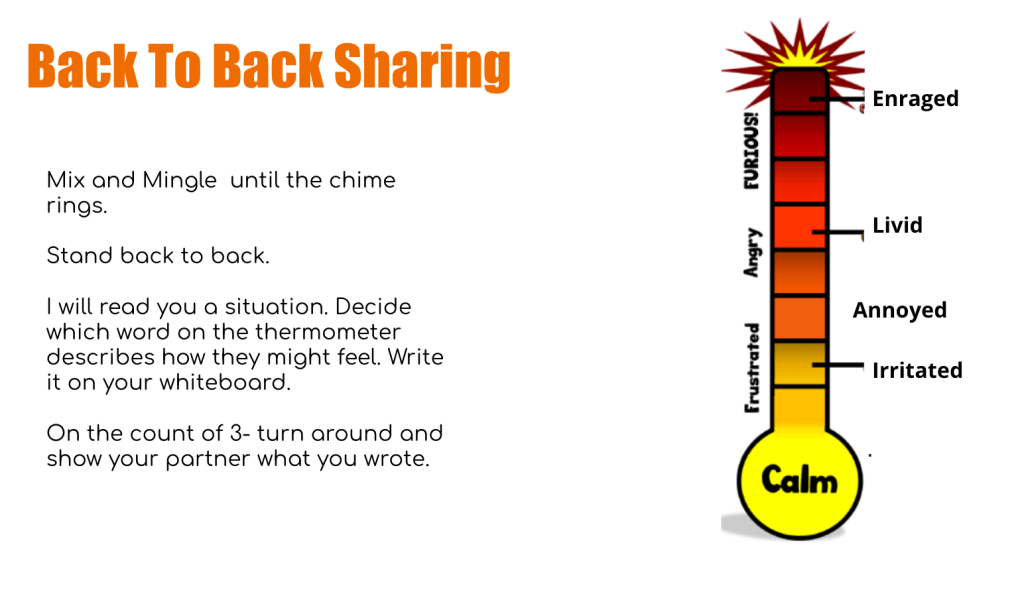
We can ask:
- What are some signs that your body is getting angry?
- What kinds of things can trigger anger?
- Do all people have the same triggers?
- What can happen when we react before our brains have time to catch up?
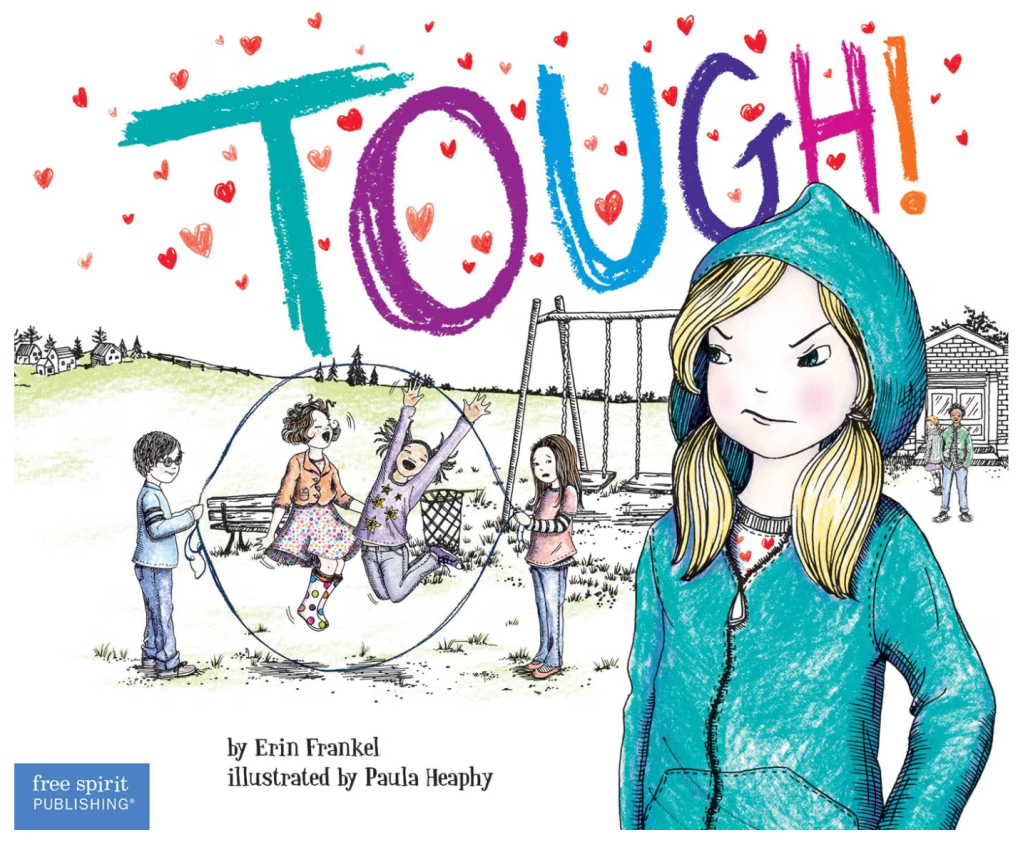
As we read Tough, we explore the main character’s decision to act “tough.”
This can lead to a really interesting conversation about the strategies children sometimes use when they feel hurt, embarrassed, powerless, or angry.
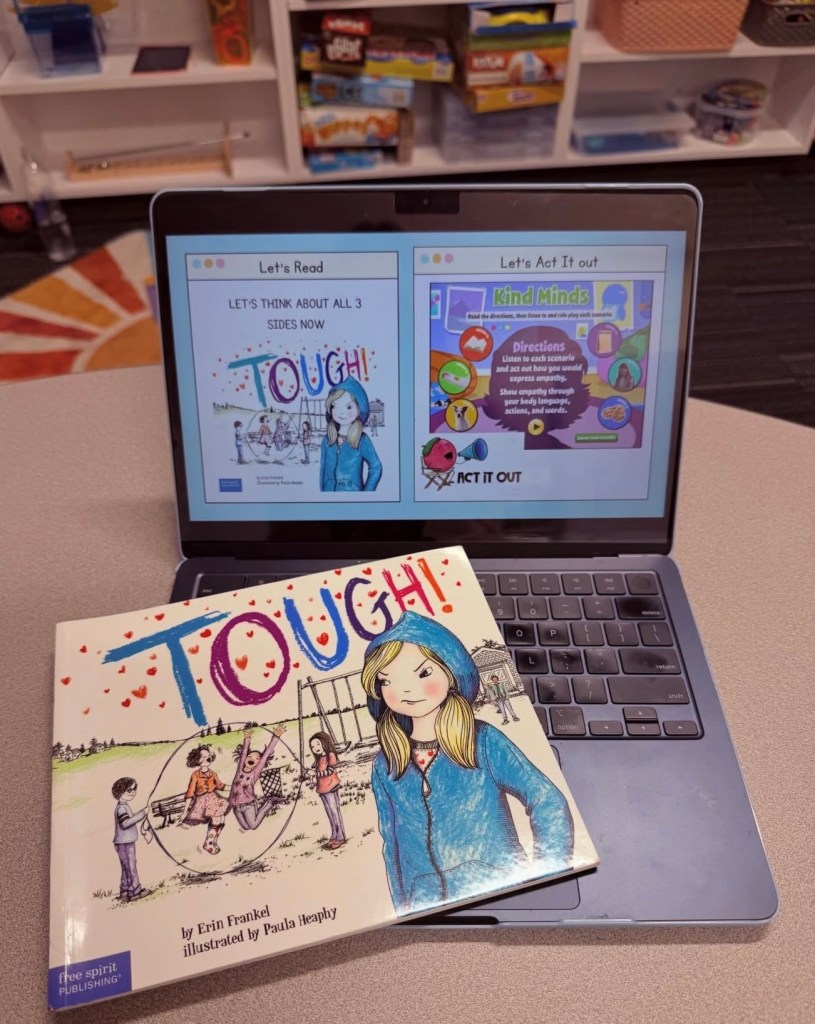
Acting tough
What might feel helpful about it?
- It can make someone feel powerful.
- It may temporarily hide vulnerable feelings.
- Other people might back away.
What problems can it create?
- It can escalate a conflict.
- Other people may become afraid or angry.
- It doesn’t actually address the underlying feeling.
- It can lead to consequences at school.
- It may make it harder to get the help we need.

This is the perfect transition into talking about healthy ways to manage anger and take mindful moments.
Instead of simply telling students to “calm down,” we can help them build a toolbox of strategies they can actually use:
- Take a break.
- Move your body.
- Take slow breaths.
- Talk to a trusted adult.
- Use words to explain what happened.
- Give yourself time before responding.
- Write or draw about what you’re feeling.
- Use a calming or mindful activity.
- Leave an escalating situation when it is safe to do so.
I especially like using short mindful moments here because students can practice a strategy immediately rather than simply hearing about it.
You can find activities for this in my Mindful Activity Set.
A favorite moment of discussion and connection
Another of my favorite discussion questions comes from Sam saying “why should I care?” when asked about how Luisa’s feelings.
We often take time to circle up and have a class discussion about why it matters to care about other people’s feelings. At first, students often give very practical answers like, “So I don’t get in trouble.” And while that’s certainly one reason to make good choices, I like to gently push the conversation a little deeper.
“But why should Sam care about how someone else feels? Why should we care—even when there isn’t a consequence for not caring?”
This opens the door to a much bigger conversation about empathy, kindness, and the kind of person we want to be. We talk about how caring for others isn’t just about avoiding trouble or getting a reward. It’s about recognizing that other people have feelings, experiences, and needs just like we do—and that our words and actions can make someone’s day harder or a little bit better.
Read more about using the “Weird Series” at the Confident Counselors Blog.
Bringing the Three Lessons Together
What I love most about using the Weird Series this way is that the books allow us to move beyond simply asking students, “What should you do if someone is bullying you?”
Instead, we’re building several skills at once:
Perspective-taking → I may not know the whole story.
Assertive communication → I can use my words to express what I need.
Emotional awareness → I can recognize what anger feels like in my body.
Self-regulation → I can pause before I react.
Problem-solving → I can think about what might help or make the situation worse.
Seeking help → I don’t have to handle unsafe or harmful behavior by myself.
And perhaps most importantly, we’re helping students understand that having strong feelings doesn’t make you a bad person, and standing up for yourself doesn’t require becoming hurtful toward someone else.
That’s why I love bibliotherapy as a school counseling tool. A good picture book gives us a character, a situation, and a safe place to practice skills before students need them in real life.
If you’re looking for elementary school counseling books about bullying, anger, friendship, perspective-taking, and emotional regulation, add The Weird Series to your counseling bookshelf. You can use the books individually, but together they provide a particularly rich opportunity to help students see that there can be more than one perspective—and that we always have choices about how we respond.
Shop the post
Pin for later


Leave a Reply